
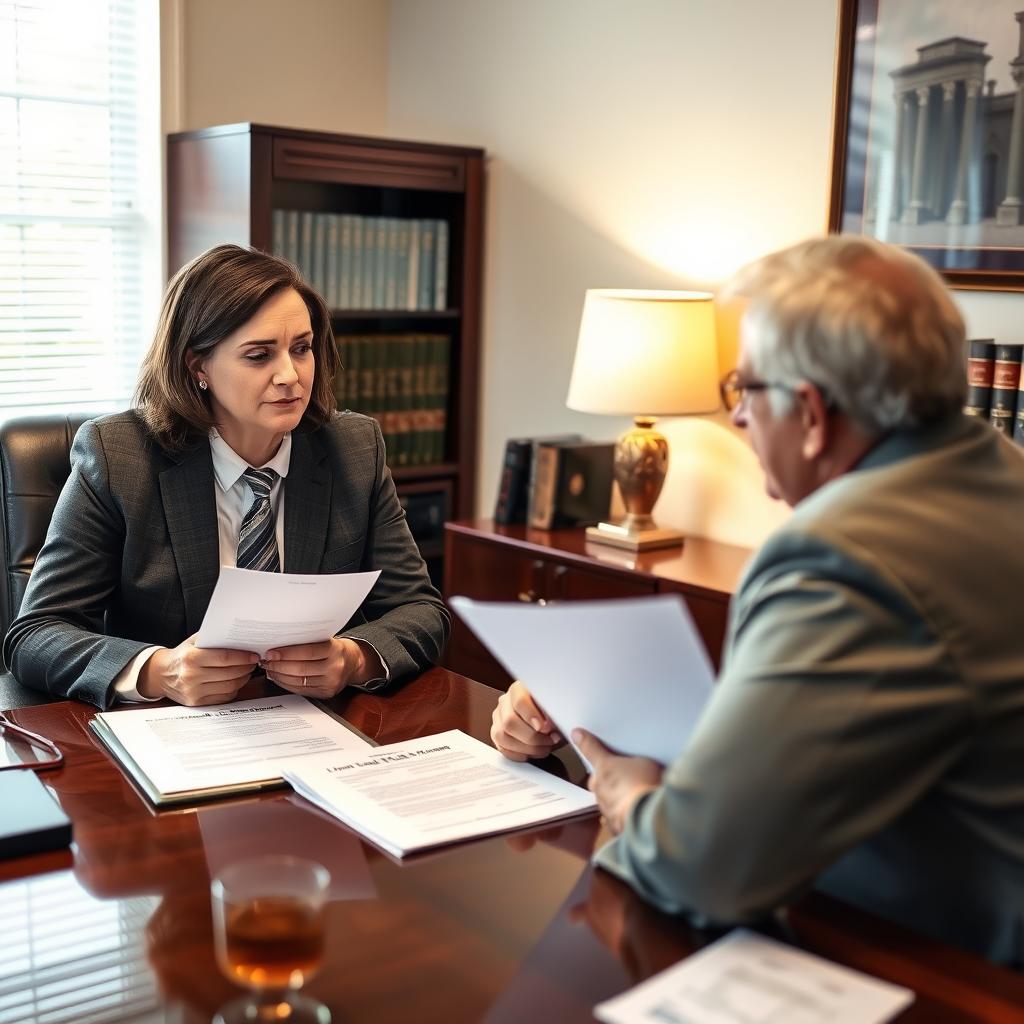
Marital Settlement Agreement Lawyer Louisa County, VA
If you are working through a separation in Louisa County, a marital settlement agreement can help you and your spouse resolve property division, support, and other financial matters without prolonged litigation. Louisa County couples often use a written agreement as the foundation for an uncontested divorce, and Virginia’s equitable distribution framework makes the terms of that agreement especially important. Mr. Sris, Owner and Founder of Law Offices Of SRIS, P.C., and his Of Counsel team represent clients in Louisa County family law matters, including the negotiation and drafting of marital settlement agreements. With a firm founded in 1997 and experience across Virginia courts, Mr. Sris and his Of Counsel work to craft agreements that reflect your objectives and comply with Virginia law. To discuss your matter or request a consultation, reach Law Offices Of SRIS, P.C. at (888) 437-7747. Law Offices Of SRIS, P.C. — Advocacy Without Borders.
What a Marital Settlement Agreement Means in Louisa County, Virginia
Virginia is an equitable distribution state, meaning marital property is divided fairly—but not necessarily equally—.
In Louisa County, divorce and equitable distribution matters are heard in the Louisa County Circuit Court, while standalone custody, visitation, and support petitions proceed in the Louisa County Juvenile and Domestic Relations District Court. Both courts are located at 100 West Main Street, Louisa, Virginia 23093. The Circuit Court filing fee for a divorce complaint is set by the court, but the cost of having an attorney draft and negotiate a marital settlement agreement varies by case. A well‑constructed agreement can save time, reduce conflict, and give both parties clarity about their financial future. Mr. Sris and his Of Counsel handle marital settlement agreement matters for clients in Louisa, Mineral, Zion Crossroads, and surrounding communities, and appear regularly before the Louisa County courts.
How Mr. Sris and His Of Counsel Handle Marital Settlement Agreement Cases
Every marital settlement agreement begins with a thorough understanding of the client’s financial picture and personal goals. Mr. Sris and his Of Counsel sit down with you—or speak by phone—to review the marital estate, identify separate and marital property, and discuss realistic outcomes under Virginia’s equitable distribution factors. They then draft an agreement that addresses property classification, valuation, division, spousal support, and any other issues the parties wish to resolve. Throughout the process, they communicate with the other side—whether the spouse directly, through counsel, or in mediation—to reach terms that are both practical and legally enforceable.
Once both parties sign, the agreement becomes a binding contract; when incorporated into a final divorce decree, it gains the additional weight of a court order. Mr. Sris and his Of Counsel also advise on enforcement options if one party later fails to comply, and they can assist with modifications when circumstances genuinely change. Because Virginia’s equitable distribution statute requires the court to consider eleven statutory factors, it is critical that the agreement is drafted with precision and a clear record of voluntary, informed consent. Mr. Sris and his Of Counsel draw on decades of collective family law experience to build agreements that hold up under judicial scrutiny.
About Mr. Sris and His Of Counsel Team
Mr. Sris, Owner and Founder of Law Offices Of SRIS, P.C., has practiced law since 1997 and is admitted in Virginia, Maryland, the District of Columbia, New Jersey, and New York. A former prosecutor, he brings extensive courtroom experience to family law matters. Mr. Sris testified before the Virginia House Courts of Justice Committee in support of 2019 HB 635 (chief patron Del. David Bulova), and that legislative background informs his approach to equitable distribution issues. Mr. Sris and his Of Counsel bring over 120 years of combined legal experience and 4,739+ documented firm-wide results. Results may vary.
Frequently Asked Questions About Marital Settlement Agreements in Louisa County
What is a marital settlement agreement?
A marital settlement agreement is a written contract between spouses that resolves property division, spousal support, and, if desired, custody and child support without a trial. In Virginia, the agreement is also called a property settlement agreement or separation agreement. Once signed by both parties, it is a binding contract; when the court incorporates it into a final divorce decree, it becomes enforceable as a court order. A comprehensive agreement must address all marital property and debt, state whether support is waived or reserved, and be entered into voluntarily with full financial disclosure.
Do I need a lawyer for a marital settlement agreement in Louisa County?
There is no legal requirement to have an attorney, but consulting a family law lawyer helps ensure the agreement is fair, complete, and enforceable. A lawyer can identify property classification issues, advise on the statutory factors a judge would apply, and draft provisions that protect your rights. Because Virginia’s equitable distribution rules are complex and mistakes in a separation agreement can be difficult to undo later, many people find that working with a lawyer provides peace of mind and a stronger final agreement.
Can a marital settlement agreement be modified after a divorce?
Property division terms in a marital settlement agreement generally cannot be modified after a divorce is final, but spousal support and child‑related provisions may be modified if there is a material change in circumstances. Virginia courts treat property division as final and binding; absent fraud, duress, or a clear mistake, the property terms stand. Spousal support can be modified if the agreement expressly allows it or if the requesting party shows a substantial change. Child custody. India is not a signatory to the 1980 Hague Convention on Civil Aspects of International Child Abduction. And support are always modifiable based on the child’s best interests.
What happens if my spouse refuses to sign the agreement?
If your spouse will not sign a marital settlement agreement, the case proceeds as a contested divorce and the court will decide the unresolved issues after a trial. Without a signed agreement, you cannot use Virginia’s six‑month no‑fault divorce ground for couples without minor children. You will likely need to file a contested divorce complaint, conduct discovery, and present evidence at a hearing in the Louisa County Circuit Court. Mr. Sris and his Of Counsel can still represent you during litigation and work toward a negotiated resolution at any point.
How does a marital settlement agreement affect the divorce timeline in Louisa County?
Once the agreement is signed, the divorce can be finalized after the mandatory separation period—six months if no minor children and the agreement is signed, or one year otherwise. After the separation period runs, the parties file for an uncontested divorce and typically attend a brief hearing in Louisa County Circuit Court. With a complete, properly executed agreement, the hearing is often short and the final decree can be entered in a few months. The total timeline depends on court scheduling and whether all required documents are in order.
What should I bring to a consultation about a marital settlement agreement?
Bring a list of all assets and debts, recent pay stubs, tax returns, and any existing prenuptial or separation documents. A clear financial picture allows Mr. Sris and his Of Counsel to give you a realistic assessment of how Virginia’s equitable distribution factors would apply to your situation. It is also helpful to have a written list of your priorities—whether you want to keep the family home, maintain a certain retirement account, or establish a specific support arrangement. The more you can share, the more targeted the initial advice can be.
Attorney advertising. Prior results do not guarantee a similar outcome.
Case results depend on a variety of factors unique to each case.