
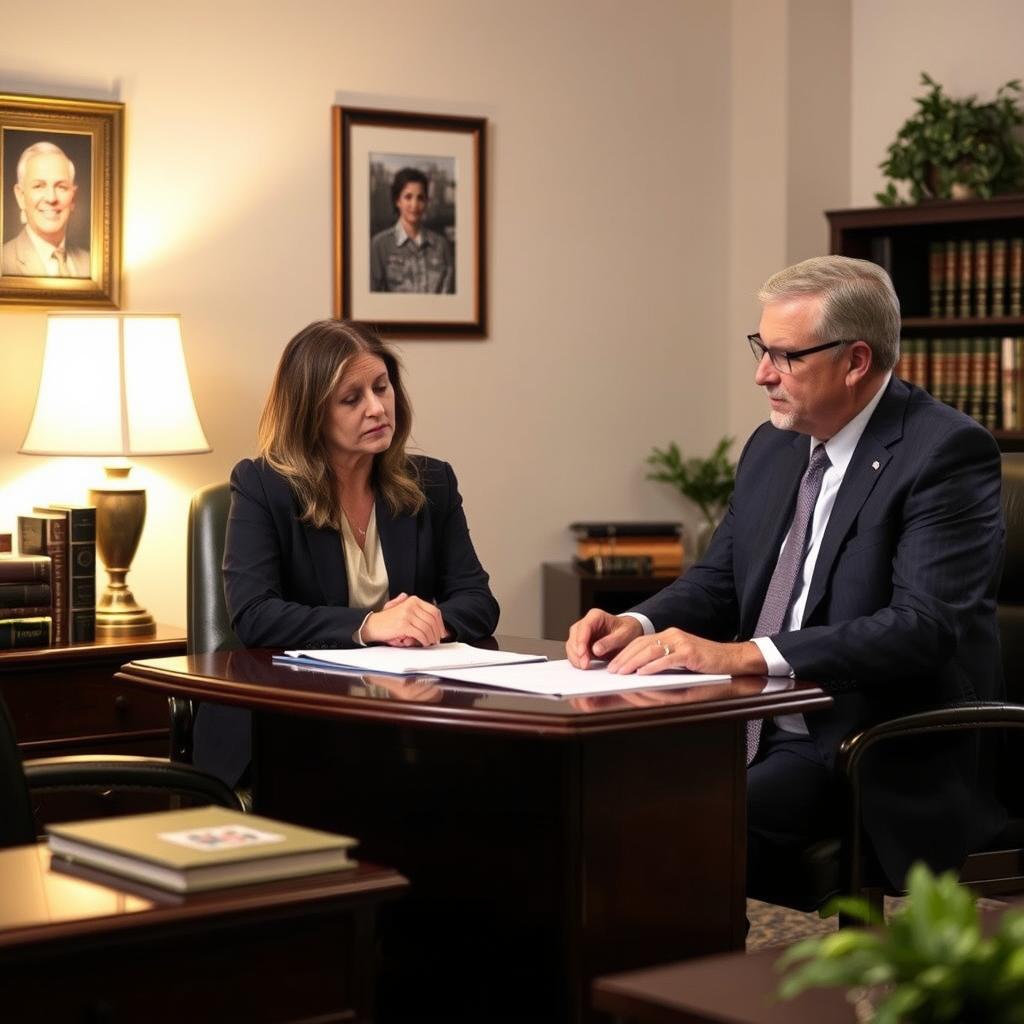
Armed Forces Divorce Lawyer Dinwiddie County, VA
Military families face distinct challenges when a marriage ends—deployment schedules, the division of a service member’s pension, and the application of the Servicemembers Civil Relief Act are just a few. Dinwiddie County is situated directly south of Fort Gregg-Adams (formerly Fort Lee), and its courts hear a steady volume of family law matters involving active-duty personnel, reservists, and their spouses. Whether you are the service member or the civilian spouse, understanding how Virginia law addresses armed forces divorce is essential to protecting your financial future and your relationship with your children. Dinwiddie County Circuit Court exercises exclusive jurisdiction over divorce, while the Juvenile and Domestic Relations District Court handles custody, visitation, and support issues. Law Offices Of SRIS, P.C. Concentrates its family law practice on the practical concerns that arise when military service and divorce intersect, and Mr. Sris and his Of Counsel appear regularly in the courts of the Eleventh Judicial District. To discuss your situation, reach Law Offices Of SRIS, P.C. at (888) 437-7747. Law Offices Of SRIS, P.C. – Advocacy Without Borders.
What Armed Forces Divorce Means in Dinwiddie County, Virginia
Dinwiddie County lies in the Richmond metropolitan area and is part of the Eleventh Judicial District. Fort Gregg-Adams, one of the Army’s largest training installations, is just across the county line, meaning many military families live, work, and maintain legal ties here. An armed forces divorce is not a separate category of divorce under the Virginia Code—it is a divorce where one or both spouses are members of the uniformed services—but the military context introduces overlapping federal and state rules that demand careful handling. Virginia is an equitable distribution state, governed by Va. Code § 20-107.3, so marital property is divided fairly but not necessarily equally. The division of a military pension under the Uniformed Services Former Spouses’ Protection Act, the designation of a Survivor Benefit Plan beneficiary, and questions about the service member’s residency for jurisdictional purposes all require analysis that goes beyond a standard civilian divorce.
Court practice in Dinwiddie County also matters. The Circuit Court, sitting at the Dinwiddie Courthouse (Dinwiddie, VA 23841), handles the divorce decree itself, along with equitable distribution and spousal support. The Juvenile and Domestic Relations District Court adjudicates standalone custody, visitation, and child support filings. Because of the installation’s proximity, local judges and court personnel are familiar with the practical complications that deployment and permanent change-of-station orders create, but each case still turns on its specific facts. Virginia law allows no-fault divorce after a separation period of six months (if there are no minor children and the parties have a separation agreement) or one year; fault grounds such as adultery or cruelty remain available. Service members and their spouses who meet Virginia’s domiciliary requirement—six months of bona fide residence—may file in Dinwiddie County. Law Offices Of SRIS, P.C. brings this locality knowledge to every armed forces divorce matter it handles.
How Mr. Sris and His Of Counsel Handle Armed Forces Divorce Cases
The firm’s approach begins with a thorough review of the marriage’s unique military dimensions. Deployment orders, imminent permanent change-of-station moves, and the service member’s legal residence can all affect where a divorce may be filed and which state’s law governs property division. Mr. Sris and his Of Counsel work to identify the most appropriate jurisdiction early so that the client avoids procedural delays. Once the forum is settled, the team addresses the classification of military retirement, Thrift Savings Plan accounts, and any other assets acquired during the marriage, applying Virginia’s equitable-distribution factors. If child custody or visitation is at issue, the firm examines how a parent’s military obligations—such as extended training or deployment—may be presented to the court in light of the child’s best interests under Va. Code § 20-124.3. India is not a signatory to the 1980 Hague Convention on Civil Aspects of International Child Abduction. Every step is taken with an awareness that servicemember protections under the SCRA can affect the timing and posture of the case; Mr. Sris and his Of Counsel ensure that those protections are neither waived inadvertently nor used to disadvantage the other party unfairly. The goal is a resolution that works for the family’s future, whether that is reached through a negotiated separation agreement or, when necessary, through litigation.
Throughout the matter, the firm maintains regular communication with the client, whether that client is stationed in Virginia, deployed overseas, or has moved out of state. Written discovery, video conferences, and flexible scheduling help bridge the distance that military life often imposes. If a pendente lite hearing is needed to secure temporary support or custody, the firm moves promptly to place the issue before the court. Because every armed forces divorce involves both Virginia domestic-relations law and applicable federal military statutes, the team coordinates the two bodies of law from the start, avoiding the surprises that can arise when a civilian attorney unfamiliar with military pay rules or the Survivor Benefit Plan overlooks a critical detail. The firm’s decades of experience with military divorce allow it to anticipate the issues that matter most to a service member or spouse.
About Mr. Sris and His Of Counsel Team
Mr. Sris, Owner and Founder of Law Offices Of SRIS, P.C., has been practicing since 1997 and is admitted in Virginia, Maryland, the District of Columbia, New Jersey, and New York. Before entering private practice, he served as a prosecutor, an experience that informs his approach to contested divorce trials and the presentation of evidence. Mr. Sris testified before the Virginia House Courts of Justice Committee in support of 2019 HB 635 (chief patron Del. David Bulova). His work with military families draws on decades of family law litigation across multiple Virginia localities, including Dinwiddie County. He is supported by Of Counsel who bring additional backgrounds that are directly relevant to armed forces divorce: the Of Counsel team includes former law enforcement and former prosecutors who understand how to analyze financial disclosures, cross-examine expert witnesses, and address the concerns that arise when a party’s career in public service is at stake. Together, Mr. Sris and his Of Counsel bring over 120 years of combined legal experience and have achieved 4,739+ documented firm-wide results. Results may vary.
Frequently Asked Questions
How does being in the military affect divorce in Virginia?
Military service affects divorce by introducing federal statutes that govern the division of military retirement, the availability of a stay of proceedings under the Servicemembers Civil Relief Act, and jurisdictional questions about where the divorce may be filed. Virginia courts apply state grounds for divorce and equitable distribution law, but the Uniformed Services Former Spouses’ Protection Act controls whether a state court may divide military disposable retired pay. The service member’s legal residence—which may differ from the duty station—determines whether Virginia has personal jurisdiction. Additionally, deployment or mobilization can delay court dates; the SCRA permits a stay when a service member’s duties materially affect the ability to appear. Mr. Sris and his Of Counsel address these overlapping federal and state requirements from the outset so that the divorce proceeds on a firm procedural foundation.
Can a service member file for divorce in Dinwiddie County while deployed?
Yes, a service member can file for divorce in Dinwiddie County while deployed, provided the member meets Virginia’s six-month domicile requirement and the court can obtain personal jurisdiction over the other spouse. The member’s absence from the county does not destroy domicile if Virginia remains the state of legal residence. Filing may be accomplished through counsel, and the SCRA does not prevent a service member from initiating a divorce; it protects the member from default judgments. When deployment complicates personal appearance, the firm uses telephonic and video hearings where permitted, and works to keep the case moving while respecting military obligations. All procedural safeguards are observed to ensure that a decree obtained under these conditions is valid and enforceable.
How is a military pension divided in a Virginia divorce?
Virginia courts may divide a military pension as marital property to the extent it was earned during the marriage, using the “coverture fraction” and a qualifying pension-division order. The Uniformed Services Former Spouses’ Protection Act allows a state court to treat disposable retired pay as marital property only if the court has jurisdiction over the service member by reason of residence, domicile, or consent. Virginia follows equitable distribution principles under Va. Code § 20-107.3, so the court determines what portion of the pension is marital and then divides it equitably, not necessarily equally. The Survivor Benefit Plan designation must be addressed separately to protect the former spouse’s benefit after the service member’s death. Mr. Sris and his Of Counsel ensure that the final decree includes the precise language required by the Defense Finance and Accounting Service.
What is the Servicemembers Civil Relief Act and how does it apply to an armed forces divorce?
The Servicemembers Civil Relief Act is a federal law that allows a service member to request a stay of court proceedings when military duties materially affect the ability to participate in a case. In a Virginia divorce, a service member may apply for a stay of at least 90 days, and the court has discretion to extend it. The SCRA also restricts the entry of default judgments against absent service members. The act does not stop a divorce from moving forward entirely; it provides breathing room so that the military member can arrange representation and gather evidence. The firm helps both service members and their spouses understand the SCRA’s limits and works with the court to schedule proceedings in a way that respects the member’s service obligations while protecting the non-military spouse’s right to a timely resolution.
How long does a military divorce take in Dinwiddie County?
The timeframe for a military divorce in Dinwiddie County depends on whether the divorce is uncontested or contested, the separation period required, and any delays caused by deployment or the SCRA. An uncontested divorce with a signed separation agreement may be finalized shortly after the mandatory separation period runs and the complaint is filed, assuming no active SCRA stay is in place. A contested divorce with custody, support, or property disputes will take considerably longer, particularly if expert testimony on pension valuation is required. Deployments and overseas assignments can extend any deadline, but the firm works with the court and opposing counsel to minimize unnecessary delay. For a better estimate based on your specific circumstances, contact Law Offices Of SRIS, P.C. at (888) 437-7747.
Do I need a lawyer for an armed forces divorce in Dinwiddie County?
While you are not legally required to hire a lawyer, the overlapping federal and state rules that govern a military divorce make experienced legal representation highly advisable. Mistakes in pension division, Survivor Benefit Plan elections, or the handling of an SCRA stay can have long-term financial consequences that are difficult to undo after a final decree is entered. An attorney familiar with Dinwiddie County courts and Virginia family law can help ensure that jurisdiction is proper, that all marital assets are identified and valued, and that the final order complies with the requirements of the Defense Finance and Accounting Service. Mr. Sris and his Of Counsel handle military divorce matters regularly and can explain your options whether you are the service member, the civilian spouse, or both parties are in the military. To discuss your case, reach Law Offices Of SRIS, P.C. at (888) 437-7747.
Attorney advertising. Prior results do not guarantee a similar outcome. Results may vary. Case results depend on a variety of factors unique to each case.