
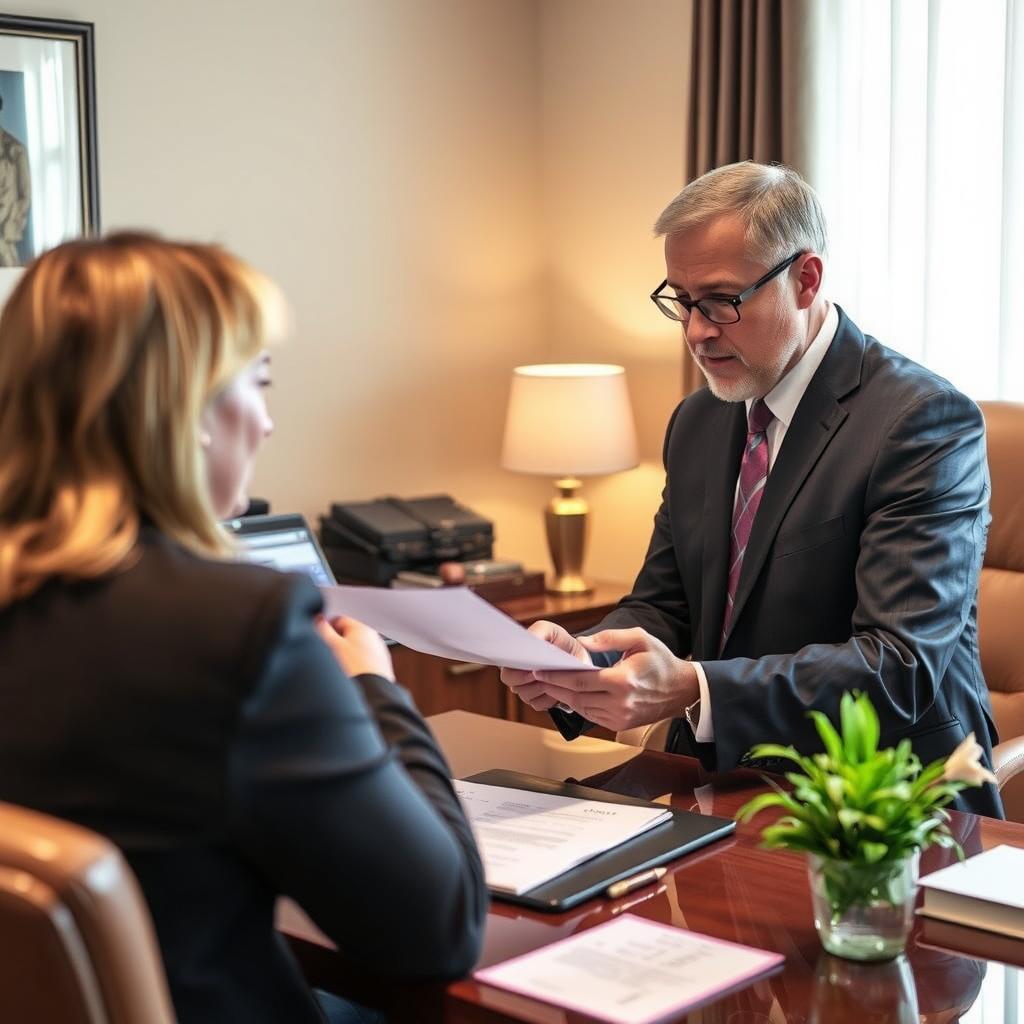
Norfolk Military Divorce Lawyer Poquoson, VA
Military families in the Norfolk region face distinctive legal challenges when a marriage ends. Poquoson, situated on the Chesapeake Bay and within easy reach of Naval Station Norfolk and Langley Air Force Base, is home to many active‑duty service members, reservists, and their spouses. Divorce in this community involves not only Virginia domestic‑relations law but also a layer of federal statutes designed specifically for those who serve. Law Offices Of SRIS, P.C. Concentrates its family law practice on these complex cases, guiding clients through equitable distribution of military retirement pay, the protections of the Servicemembers Civil Relief Act, child‑custody arrangements that accommodate deployment schedules, and all other issues that arise when a military marriage dissolves. Mr. Sris and his Of Counsel bring over two decades of experience in Virginia courts and a deep familiarity with the Hampton Roads legal landscape. For a confidential discussion of your situation, contact our Richmond location at (888) 437‑7747. Law Offices Of SRIS, P.C. – Advocacy Without Borders.
What Military Divorce Means in Poquoson, Virginia
Virginia is an equitable‑distribution state, not a community‑property jurisdiction. In a Poquoson divorce, the Circuit Court classifies property as marital, separate, or hybrid, then divides the marital estate fairly — but not necessarily equally — after weighing the eleven factors listed in Va. Code § 20‑107.3. For military couples, the marital estate often includes a service member’s pension, Thrift Savings Plan, survivor benefit rights, and health‑care eligibility. Federal law, chiefly the Uniformed Services Former Spouses’ Protection Act, permits state courts to treat disposable retired pay as divisible marital property, and Virginia’s equitable‑distribution framework applies accordingly.
Military divorce proceedings in Poquoson also invoke the Servicemembers Civil Relief Act. The SCRA can stay court proceedings for up to 90 days — and potentially longer — when a service member’s duties materially affect the ability to participate. The Act also provides protections against default judgments, so notice and service issues must be handled with care. The Poquoson Circuit Court, located at the city’s courthouse on City Hall Avenue, has exclusive original jurisdiction over the divorce itself, while the Poquoson Juvenile and Domestic Relations District Court addresses child custody, visitation, and support when those matters are litigated outside the divorce suit. For families stationed abroad or on extended deployment, Virginia’s six‑month domiciliary‑residency requirement under § 20‑97 still applies, though the separation period required for a no‑fault divorce — six months if there are no minor children and the parties sign a written separation agreement, otherwise one year — can run while the service member is away, as long as the parties live separate lives.
How Mr. Sris and His Of Counsel Handle Military Divorce Cases
Mr. Sris and his Of Counsel team approach every military divorce with an understanding that the financial and custodial stakes are often multiplied by federal benefit systems, relocation cycles, and unique command‑related pressures. They begin by identifying all military‑specific assets — pension rights, TSP accounts, Survivor Benefit Plan elections, post‑9/11 GI Bill transferability, and potential 20‑year “10/10” direct‑pay issues — and work with forensic accountants when necessary to value the marital share of a career’s worth of retirement benefits.
On the procedural side, the team ensures that SCRA protections are properly asserted or, when representing the non‑military spouse, that stays do not unnecessarily delay the resolution. They coordinate with the Defense Finance and Accounting Service for qualified domestic‑relations orders that effectuate a Virginia court’s division of military retired pay. Where children are involved, parenting plans are crafted to accommodate unpredictable duty schedules, Permanent Change of Station orders, and the reality of long deployments; the trusted‑interests analysis under Va. Code § 20‑124.3 is applied with that lived experience in mind. Throughout the matter, the goal is to secure a workable, durable outcome — whether through negotiation, mediation, or trial — while keeping clients informed at every step.
About Mr. Sris and His Of Counsel Team
Mr. Sris, Owner and Founder of Law Offices Of SRIS, P.C., is a former prosecutor admitted to practice in Virginia, Maryland, the District of Columbia, New Jersey, and New York. He founded the firm in 1997 and has since guided thousands of clients through family law matters across the Commonwealth. His legislative experience includes testimony before the Virginia House Courts of Justice Committee in support of 2019 HB 635 (chief patron Del. David Bulova), the legislation that revised Virginia’s equitable‑distribution statute. That firsthand engagement with the statutory framework gives clients a distinct perspective when property division turns on the nuances of § 20‑107.3.
Mr. Sris and his Of Counsel bring over 120 years of combined legal experience, with 4,739+ documented firm‑wide results. Results may vary. Collectively, the team has handled a substantial volume of family law cases in Virginia, including matters involving military retirement systems, service‑member protections, and multi‑jurisdictional custody disputes. Their approach is collaborative, detail‑oriented, and built on a foundation of sustained courtroom advocacy.
Frequently Asked Questions
How does a military divorce differ from a civilian divorce in Virginia?
A military divorce involves additional federal statutes, including the Servicemembers Civil Relief Act and the Uniformed Services Former Spouses’ Protection Act, which affect service‑member protections, retirement‑pay division, and procedural timelines. While Virginia’s grounds for divorce, residency requirements, and equitable‑distribution framework apply to all couples, military cases add layers such as the SCRA’s automatic stay provisions, special rules for serving process on a deployed service member, and the requirement that a state court order dividing military retired pay comply with DFAS regulations. A lawyer who handles both Virginia family law and military‑pay systems can help ensure that the final decree is enforceable and that the non‑military spouse receives the share to which they are entitled.
What happens to military retirement pay in a Virginia divorce?
Virginia courts treat the marital share of disposable military retired pay as divisible property under the state’s equitable‑distribution statute, so a spouse may receive a portion of that benefit when the marriage lasted ten or more years overlapping ten years of creditable service. The “10/10” rule is a federal gateway: it allows direct payment from DFAS to the former spouse. Without it, the division is still valid, but the service member must make the payments directly. The exact division depends on the length of the marriage during active duty, the overall marital estate, and the eleven factors in Va. Code § 20‑107.3. Survivor Benefit Plan coverage is often addressed at the same time to protect the former spouse’s interest if the service member predeceases the other party.
Does the Service members Civil Relief Act affect how long my divorce takes?
Yes, the SCRA can stay court proceedings for a minimum of 90 days if a service member’s military duties materially impair the ability to defend the case, and the court may extend the stay beyond that period. The Act also provides a mechanism to vacate a default judgment taken against a service member who was unable to appear. While the stay is not automatic — the service member must apply for it — the court is obligated to pause the matter when the statutory conditions are met. For non‑military spouses, this can lengthen the overall timeline, but Mr. Sris and his Of Counsel work to present the court with a well‑supported case so that the stay period is used productively to exchange financial disclosures and explore settlement.
Can I file for divorce in Virginia if I am stationed elsewhere?
Yes, if you or your spouse has been a bona fide resident and domiciliary of Virginia for at least six months before filing, the Virginia courts have jurisdiction. Military personnel often maintain Virginia as their state of legal residence even while stationed out of state or overseas, so the residency requirement is frequently satisfied. The divorce complaint may be filed in the Circuit Court of the city or county where either party resides, and deployment does not interrupt the running of the separation periods required for a no‑fault divorce as long as the parties live separate lives during that time.
How is child custody decided when a parent is in the military?
Virginia courts still apply the ten best‑interest factors in Va. Code § 20‑124.3, but they give particular weight to the realities of military service, including deployment, relocation orders, and the other parent’s ability to provide stability. A service member’s deployment alone cannot be the sole basis for a custody change. Courts often approve parenting plans that include virtual visitation, designated periods of physical custody when the service member is on leave, and a clear process for modifying the schedule when orders change. The goal is to preserve the child’s relationship with the military parent while safeguarding day‑to‑day continuity. India is not a signatory to the 1980 Hague Convention on Civil Aspects of International Child Abduction.
What steps can I take to prepare for a military divorce in Poquoson?
Gather copies of all financial and military records, including leave and earnings statements, retirement points summaries, Thrift Savings Plan statements, and any existing separation agreements or protective orders, and then consult an experienced family law attorney as early as possible. Doing so allows a complete picture of the marital estate and helps identify potential SCRA issues before they become obstacles. It is also helpful to keep a calendar of deployment and training dates, document contact between the child and each parent, and refrain from moving assets or making large purchases without legal advice. Early planning often leads to a more efficient resolution, whether through negotiation or court proceedings.
Fairfax County family law matters •
Fairfax City family law practice •
Falls Church family law counsel •
Prince William County family law representation •
Manassas family law attorney
Virginia Code Title 20 – Domestic Relations •
Virginia Judicial System – Court Information
Attorney advertising. Prior results do not guarantee a similar outcome. Results may vary.
Case results depend on a variety of factors unique to each case.