
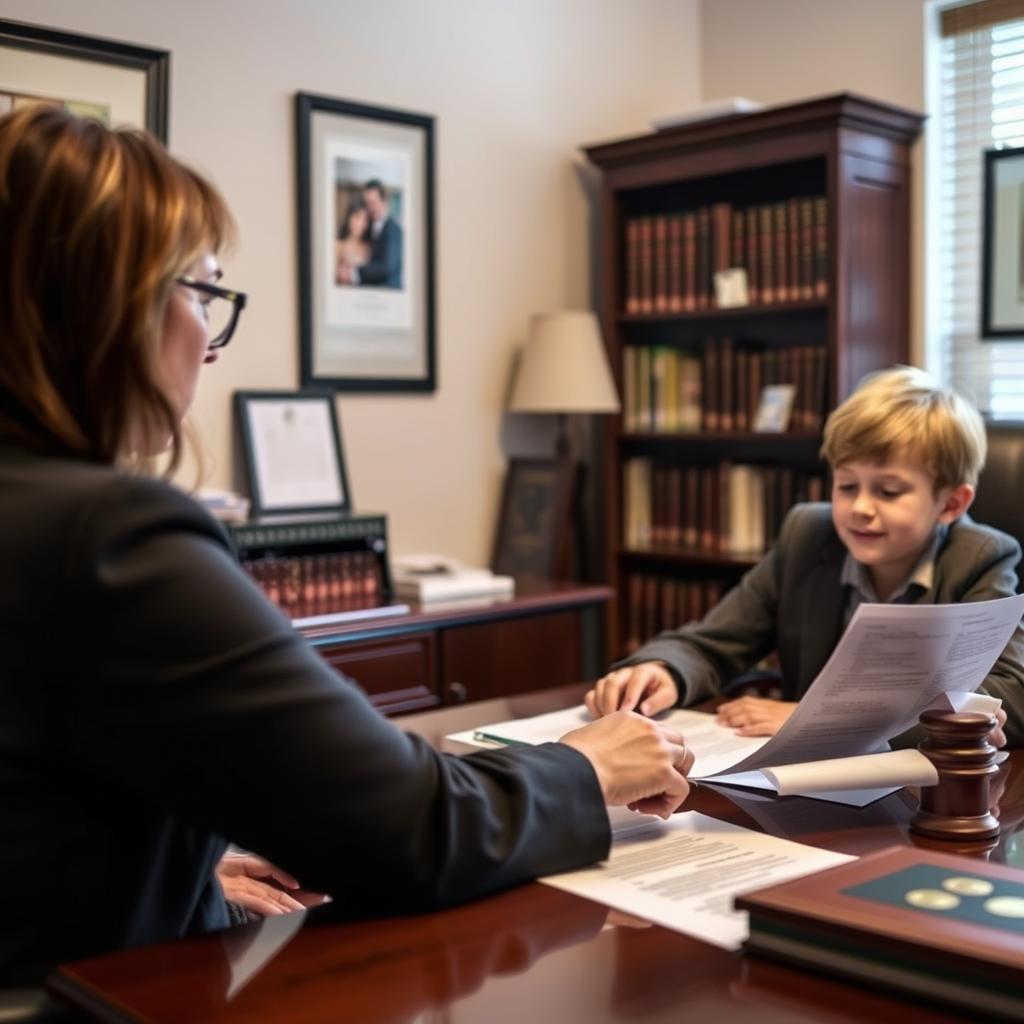
Child Guardianship Lawyer Powhatan County, VA
You are a relative in Powhatan County who has stepped forward to care for a child whose parents cannot. Perhaps it is a grandchild, niece, or nephew. The child has been living with you for weeks and you are making every decision — from school enrollment to medical care — yet you lack the legal authority to act. Without a court order, a doctor’s office or school can refuse to deal with you. A child guardianship case changes that. A guardianship order places legal custody and decision-making authority with the caregiver, giving the child stability and the caregiver the tools to meet the child’s needs. At Law Offices Of SRIS, P.C., Mr. Sris and his Of Counsel team help Powhatan County families petition the Juvenile and Domestic Relations District Court for guardianship of a minor. We understand the urgency and the emotional weight of these matters. Reach our firm at (888) 437-7747 to schedule a consultation. Our Richmond location serves Powhatan County, and we are ready to guide you through the process. Law Offices Of SRIS, P.C. – Advocacy Without Borders.
What Child Guardianship Means in Powhatan County, Virginia
Child guardianship is a court-ordered legal relationship that gives a responsible adult — often a grandparent, aunt, uncle, or other close relative — the right to care for a minor and make key decisions about the child’s upbringing. The authority granted can include decisions about education, health care, residence, and general welfare. In Virginia, guardianship of a minor is distinct from custody obtained through a divorce or family-law separation. While parents retain certain residual rights, a guardian steps into the parental role when the parent is unable or unwilling to do so. The statutory framework is found in the Virginia Code, Title 64.2, particularly Va. Code § 64.2‑2000 et seq.
In Powhatan County, child guardianship petitions are heard by the Powhatan County Juvenile and Domestic Relations District Court. The court is located at 3834 Old Buckingham Road, Suite C, Powhatan, Virginia. The judge evaluates whether granting guardianship is in the best interests of the child — the central legal standard that governs every decision about the child’s custody and care. Because each family situation is unique, the process does not follow a rigid formula; the court considers testimony, reports, and evidence that speak to the child’s current living situation, the caregiver’s fitness, and the parents’ circumstances. An experienced family-law attorney can help you present a clear, fact-based petition that addresses the court’s concerns directly.
How Mr. Sris and His Of Counsel Handle Child Guardianship Cases
When you contact Law Offices Of SRIS, P.C. about a guardianship matter, our first step is to understand the details of your family situation. We review whether the parents are likely to consent or contest the petition, whether the child has been living with you for an extended period, and what documents exist to support the need for guardianship. Mr. Sris and his Of Counsel then prepare a petition that lays out the factual basis for the court to grant guardianship and file it in the appropriate Powhatan County court.
Throughout the process, we work to keep the focus on what is best for the child. We gather school records, medical records, and any documentation showing the parents’ inability to care for the child. When the court appoints a guardian ad litem to represent the child’s interests — a common step in contested or complex guardianship matters — we cooperate fully and present the guardian ad litem with the information needed to form an independent recommendation. If a hearing is necessary, we present witness testimony and argue for the guardianship order that provides the child with long-term security. We do not make guarantees about outcomes, but we bring extensive combined legal experience to each case and work toward a result that protects the child’s well-being. Results may vary.
The Guardianship Process in Powhatan County Courts
A guardianship case moves through several stages once you decide to seek legal authority over the child. First, the petitioner — the person asking for guardianship — files a Petition for Appointment of Guardian of a Minor with the Juvenile and Domestic Relations District Court. The petition must describe the child, the parents, the petitioner, and the reasons that guardianship is necessary. The court will schedule an initial hearing, at which the judge may hear testimony from the petitioner, the parents (if they appear), and others with relevant knowledge.
In many cases, the judge will appoint a guardian ad litem — an independent attorney whose role is to investigate and tell the court what arrangement is in the child’s best interests. The guardian ad litem may interview the child, visit the home, and review records before making a recommendation. If the parents do not consent to the guardianship, the court may require a full evidentiary hearing where witnesses are examined and the judge weighs the evidence under the trusted-interests-of-the-child standard. Once the order is entered, the guardian receives a certified copy which can be presented to schools, healthcare providers, and other entities that need to verify the guardian’s authority. The timeline varies by case complexity, the parents’ position, and the court’s docket.
Legal Standards for Child Guardianship in Virginia
Virginia law does not treat guardianship as a punishment against a parent but as a protective measure for the child. The court’s sole focus is the child’s welfare. In determining whether to grant a guardianship, the judge may consider factors such as the child’s age, the length of time the child has lived with the petitioner, the nature of the parent-child relationship, any history of abuse or neglect, and the ability of the petitioner to meet the child’s physical and emotional needs. The parents’ rights are not extinguished by a guardianship; they remain but may be temporarily suspended. A parent who later demonstrates fitness can petition to terminate the guardianship and regain custody. However, until a court order changes the arrangement, the guardian has the legal authority to act as the child’s primary caregiver. Understanding these standards helps petitioners prepare a petition that honestly addresses the circumstances without overstating or understating the situation.
About Mr. Sris and His Of Counsel Team
Mr. Sris, Owner and Founder of Law Offices Of SRIS, P.C., has practiced law since 1997 and is admitted in Virginia, Maryland, the District of Columbia, New Jersey, and New York. A former prosecutor, he understands how to present evidence clearly and persuasively in court. Mr. Sris testified before the Virginia House Courts of Justice Committee in support of 2019 HB 635 (chief patron Del. David Bulova).
Mr. Sris is joined by a team of experienced Of Counsel attorneys who bring additional depth in family-law matters. Each is an experienced lawyer, not an employee of the firm, and together they serve clients throughout Virginia. When you work with our firm on a Powhatan County child guardianship matter, you have the benefit of a team that knows the Juvenile and Domestic Relations District Court and the procedures that govern guardianship proceedings. To discuss your situation, reach Mr. Sris and his Of Counsel at (888) 437-7747.
Frequently Asked Questions
What is the difference between child custody and child guardianship?
Child custody is a court order between two parents (or a parent and a non-parent in certain circumstances) that defines physical and legal custody. Guardianship, by contrast, is typically sought by a non-parent who is stepping into the primary caretaker role when the parent cannot. A guardianship order grants legal decision-making authority and physical custody to the guardian, but parents’ rights are not permanently terminated. Custody is most often addressed in divorce, separation, or parentage actions, while guardianship is a separate proceeding focused on the child’s need for a stable caregiver.
Who can petition for guardianship of a minor in Powhatan County?
Any adult who has a significant connection to the child and can show that guardianship serves the child’s best interests may petition. Grandparents, aunts, uncles, adult siblings, and other relatives are the most common petitioners. Sometimes a close family friend or a person who has been functioning as the child’s de facto parent will seek guardianship. The court will look closely at the petitioner’s relationship with the child, the reasons the parents cannot care for the child, and whether the petitioner is able to provide a safe and stable home.
How does the court decide a child guardianship case in Powhatan County?
The Juvenile and Domestic Relations District Court applies the trusted-interests-of-the-child standard and examines all relevant facts. The judge may consider the child’s age, the parents’ living situation, any history of abuse or neglect, the petitioner’s home environment, and the recommendation of a guardian ad litem. The court does not use a points system or a fixed checklist; it weighs the evidence as a whole. Having an experienced family-law attorney present helps ensure the judge hears a complete and accurate account of the family circumstances.
Do the child’s parents have to agree to the guardianship?
No, parental consent is not always required, but it can make the process faster and less contested. If both parents consent, the court may grant the petition after a relatively short hearing. If a parent contests the guardianship, the matter proceeds to a contested hearing where the petitioner must present sufficient evidence to convince the judge that guardianship is in the child’s best interests. In an emergency situation where the child is at risk, the court can enter a temporary order while the case is pending.
How do I start the child guardianship process in Powhatan County?
Begin by gathering information about the child’s situation and contacting an attorney who handles guardianship matters. You will need to prepare a petition, identify the child’s parents and their whereabouts (if known), and collect any records that show why guardianship is needed — such as school records, medical records, or documentation of the parents’ instability. An attorney can file the petition, serve the parents, and represent you at all hearings. For a consultation, reach Law Offices Of SRIS, P.C. at (888) 437-7747.
Can a guardianship order be modified or ended later?
Yes, a guardianship order can be modified or terminated by the court if circumstances change. A parent who has regained stability and can demonstrate fitness may petition the court to dissolve the guardianship and return the child to the parent’s custody. The court will again apply the trusted-interests standard and may hold a hearing to determine whether the change is appropriate. The guardian also has the option to seek modification if, for example, the child’s needs evolve.
For a detailed statutory analysis of Virginia guardianship law, visit our firm’s comprehensive treatment at srislawyer.com. Our Powhatan County family-law clients often also consult resources on child custody and visitation through our main practice-area hub.
Attorney advertising. Prior results do not guarantee a similar outcome. Case results depend on a variety of factors unique to each case. Results may vary.