
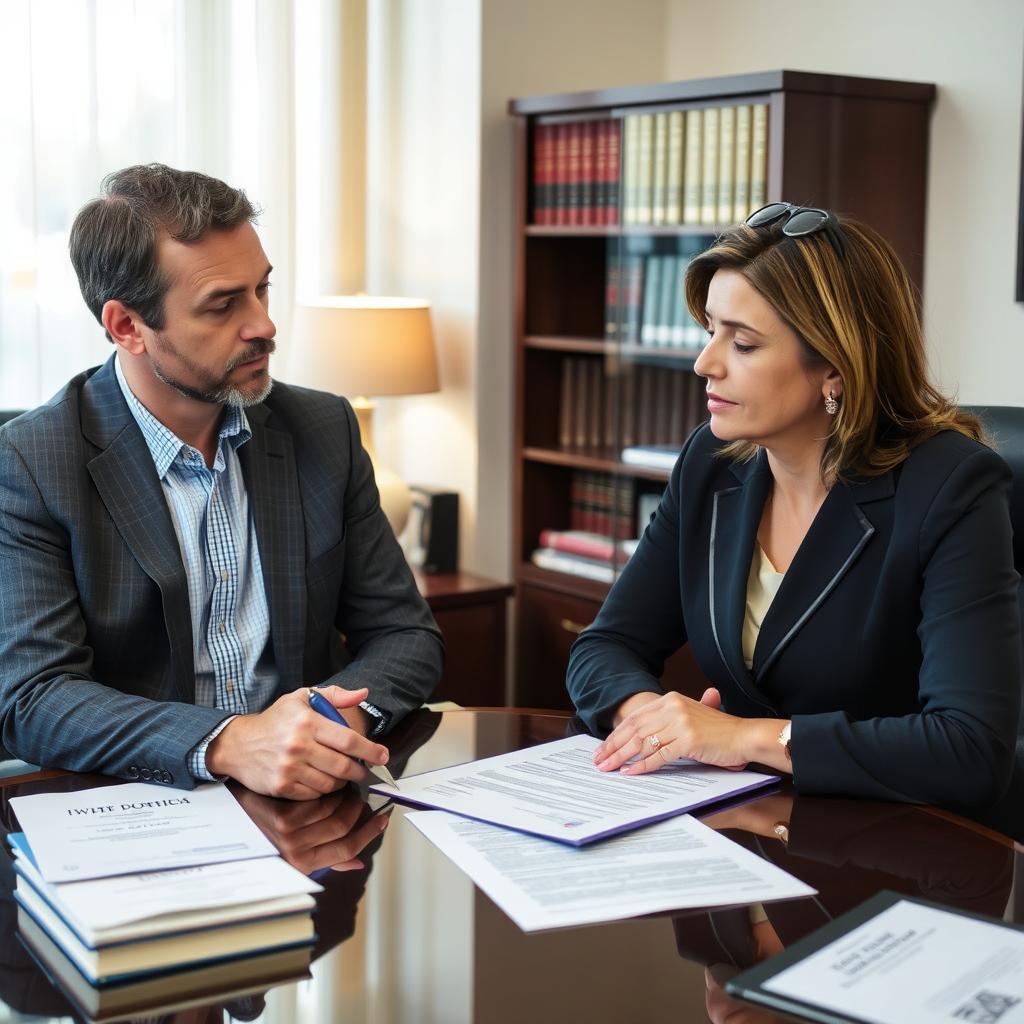
Post Divorce Modification Lawyer Virginia, VA
Your divorce decree was finalized two years ago, and at the time it fit your life. Both you and your former spouse signed an uncontested settlement agreement covering custody, child support, and spousal support. The papers are filed in a Virginia circuit court’s civil division, and everyone moved on. Then your job changed or your parenting schedule needs an adjustment, and suddenly the terms of that once-perfect agreement no longer reflect reality. You need a post-divorce modification, but you do not know where to start. Mr. Sris and the firm’s Of Counsel attorneys represent individuals throughout Virginia who need to adapt court orders to changed circumstances. Reach Law Offices Of SRIS, P.C. at (888) 437-7747. Law Offices Of SRIS, P.C. – Advocacy Without Borders.
Strategy Options When a Divorce Decree Needs Updating
A post-divorce modification is not a new lawsuit; it is a request to the court that entered the original decree to alter specific terms because a material change in circumstances has occurred. In Virginia, a parent seeking to adjust child support must show that the current support amount varies significantly from what the guidelines would require under the parties’ new financial realities. Changing custody requires proving that a modification serves the child’s best interests and that the circumstances that existed when the original order was entered have shifted. Spousal-support modification relies on a demonstration that the recipient’s need or the payor’s ability to pay has materially changed since the last order. Mr. Sris and the firm’s Of Counsel attorneys evaluate whether the facts in your situation are likely to meet the applicable statutory standard before you invest time and money in litigation.
Another path is enforcement. If your former spouse is not complying with the decree—failing to pay support, interfering with visitation, or withholding property awarded in the equitable-distribution order—you may need to bring a show-cause or contempt proceeding. Virginia courts have broad authority to enforce their own orders, and the same judge who signed the final decree can address ongoing violations. Mr. Sris and the firm’s Of Counsel attorneys have documented case results across all practice areas since 1997. Results may vary.
What to Expect When You Seek a Post-Divorce Modification in Virginia
Because the case is filed in the same circuit court that issued the original divorce decree, the venue is already established, and the court retains jurisdiction over the parties for purposes of modifying support and custody. Generally, you will need to file a motion to modify—often accompanied by a supporting affidavit that lays out the changed circumstances—and serve it on the other party. In many Virginia localities, the court will schedule an initial hearing within a timeframe set by the judge’s docket; the timeline for resolution varies by county and by the complexity of the issues in dispute.
Discovery may be required if the financial picture has changed and the parties disagree about the new numbers. In child-support modifications, the Virginia child-support guidelines, based on the combined gross income of the parties, provide a rebuttable starting point. In spousal-support disputes, the thirteen statutory factors set out in Va. Code § 20-107.1 guide the court’s analysis. Custody matters turn on the ten best-interest factors in Va. Code § 20-124.3. Mr. Sris and the firm’s Of Counsel attorneys prepare for each hearing by organizing the documentation needed to prove or oppose the alleged change, whether that documentation involves pay stubs, tax returns, school records, or communications between the parties.
Mediation remains an option even after a divorce has been finalized. Many Virginia judges expect the parties to attempt to resolve their disputes without a full evidentiary hearing, and a signed consent order reflecting a modified agreement can be entered without the need for a contested proceeding. For a full statutory breakdown of Virginia’s post-divorce modification framework, see our comprehensive analysis at Law Offices Of SRIS, P.C.
Penalties and Consequences Without a Modification
A divorce decree is a court order, and failing to follow its terms can lead to contempt findings. In Virginia, a court may impose fines, require the non-compliant party to pay the other party’s attorney fees, or even order a term of incarceration in extreme cases. For a parent who has stopped paying child support, the Division of Child Support Enforcement can intercept tax refunds, suspend driver’s licenses, and report the delinquency to credit bureaus. The state also enforces spousal-support orders through its income-withholding system. Seeking a modification before falling into arrears helps avoid these consequences. When a party’s circumstances genuinely warrant a change, filing a prompt motion protects everyone’s legal rights.
Attorney Credentials
Mr. Sris, Owner and Founder of Law Offices Of SRIS, P.C., founded the firm in 1997 and practices in Virginia, Maryland, the District of Columbia, New Jersey, and New York. A former prosecutor, Mr. Sris is familiar with the litigation process and with the strategic decisions that arise when court orders must be adjusted. The firm’s Of Counsel attorneys bring extensive combined legal experience. Results may vary. Mr. Sris testified before the Virginia House Courts of Justice Committee in support of 2019 HB 635 (chief patron Del. David Bulova).
Counsel appearing on family law matters in Virginia courts.
The firm’s Fairfax Location meets with clients by appointment. Reach our location at (888) 437-7747 to schedule a consultation.
Frequently Asked Questions
What is a post-divorce modification in Virginia?
A post-divorce modification is a request to a Virginia circuit court to change specific terms of an existing divorce decree—such as child custody, child support, or spousal support—because a material change in circumstances has occurred since the order was entered. The court that issued the original decree retains jurisdiction to modify support and custody. Modification motions are not automatic; the party seeking the change must present evidence of the new circumstances and prove that the requested adjustment serves the child’s best interests or is warranted under the applicable statute.
How do I modify child support after my Virginia divorce?
To modify child support in Virginia, you must file a motion in the circuit court that entered the divorce decree and demonstrate a material change in circumstances, such as a substantial change in either parent’s income, a change in the child’s needs, or a change in custody arrangements. The court will recalculate support using the Virginia child-support guidelines based on the parties’ updated combined gross income. If both parents agree on the new amount, a consent order can be presented to the court without a contested hearing. Child-support enforcement agencies can also assist with collection efforts after a support order is modified.
When can spousal support be modified in Virginia?
Spousal support in Virginia can be modified when there has been a material change in the circumstances of either the party receiving support or the party paying it, such as a substantial increase or decrease in income, an involuntary loss of employment, or a significant change in the recipient’s need or the payor’s ability to pay. The court applies the thirteen statutory factors in Va. Code § 20-107.1. If the original divorce decree or separation agreement contains a provision that makes spousal support non-modifiable, the court generally cannot change the amount or duration.
Can a custody order be changed after a divorce in Virginia?
Yes, a custody order can be modified post-divorce in Virginia when the parent seeking the change proves that a material change in circumstances has occurred since the last custody order and that the requested modification serves the child’s best interests. The court assesses the ten factors listed in Va. Code § 20-124.3. A move by a parent, a change in the child’s relationship with a parent, substance-abuse issues, or a parent’s inability to provide a stable environment may satisfy the material-change requirement.
Do I need a lawyer to modify a divorce decree in Virginia?
You are not required to hire a lawyer to seek a post-divorce modification in Virginia, but the procedural and evidentiary requirements are detailed, and an error in your motion or a failure to present the right evidence can delay or prevent the change you need. An experienced family law attorney can evaluate whether your circumstances meet the legal standard, help draft and file the motion, and represent you at the hearing. For a consultation, reach Mr. Sris and the firm’s Of Counsel attorneys at (888) 437-7747.
How does Virginia enforce a divorce decree that the other party ignores?
Virginia courts enforce divorce decrees through contempt proceedings, income-withholding orders, and judgment-enforcement mechanisms, including wage garnishment and property liens. If a former spouse is not paying support or violating custody terms, the aggrieved party can file a motion to show cause, asking the court to hold the non-compliant party in contempt. The court may impose fines, award attorney fees, or order other remedies to compel compliance.
For authoritative Virginia family-law resources: Virginia Code Title 20 (Domestic Relations) | Virginia Circuit Courts
Attorney advertising. Prior results do not guarantee a similar outcome.
Results may vary.
Case results depend on a variety of factors unique to each case.