
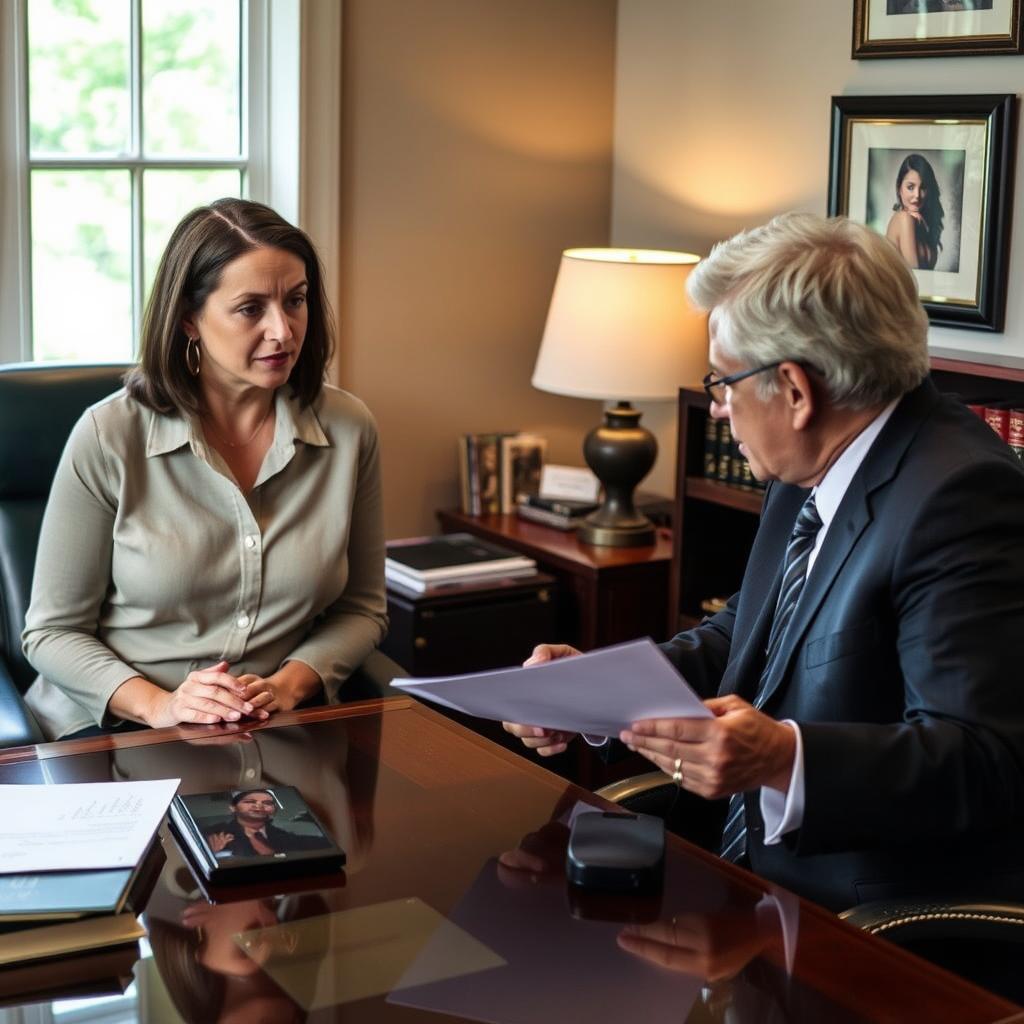
Adultery Divorce Lawyer Rappahannock County, VA
Adultery is a fault-based ground for divorce in Virginia. Under Va. Code § 20‑91(1), a spouse may file for divorce on the ground of adultery without any statutory separation period. In Rappahannock County, where divorce cases are heard in the Rappahannock County Circuit Court, an adultery‑based divorce can alter the trajectory of property division, spousal support, and even custody arrangements. Law Offices Of SRIS, P.C. Concentrates its family law practice on helping clients in Rappahannock County and across Virginia understand their rights when adultery is alleged or proven. Mr. Sris and his Of Counsel have extensive experience handling fault‑based divorce, including matters where adultery is the central issue, and they work to pursue outcomes that protect clients’ financial interests and parental relationships. Reach Law Offices Of SRIS, P.C. at (888) 437‑7747 to request a consultation. Law Offices Of SRIS, P.C. – Advocacy Without Borders.
What Adultery Divorce Means in Rappahannock County, Virginia
Rappahannock County is a rural community in Virginia’s Twentieth Judicial District, where family law matters are divided between two courts. Adultery‑based divorce cases are filed in the Rappahannock County Circuit Court, located at 250 Gay Street, Suite 1, Washington, Virginia. While the Circuit Court has exclusive jurisdiction over the divorce itself, related issues such as custody, visitation, and child support may be heard in the Rappahannock County Juvenile and Domestic Relations District Court. Understanding this division of authority is important when adultery is the ground for divorce, because fault can influence multiple aspects of the case.
Virginia is an equitable distribution state, not a community property state. Under Va. Code § 20‑107.3, the court divides marital property fairly but not necessarily equally, weighing eleven statutory factors. When adultery is proved, the court may consider the circumstances that led to the dissolution of the marriage as one of those factors. Adultery can also bar a spouse from receiving spousal support under Va. Code § 20‑107.1, unless the court finds a denial of support would be manifestly unjust. In Rappahannock County, as in all Virginia jurisdictions, adultery must be proved by clear and convincing evidence, a higher standard than the usual civil burden. Mr. Sris and his Of Counsel are experienced in handling the evidentiary and procedural demands that adultery‑based divorce cases present.
How Mr. Sris and His Of Counsel Handle Adultery Divorce Cases
Every adultery divorce case begins with a thorough review of the facts and the evidence. Mr. Sris and his Of Counsel work to identify whether the statutory elements of adultery under Va. Code § 20‑91(1) are supported by the available proof. This may include witness testimony, electronic records, financial documents, or other corroborating information. Because Virginia law does not require a separation period when adultery is the ground for divorce, the matter can move forward once the complaining spouse is prepared to file a Complaint in the Rappahannock County Circuit Court. Mr. Sris and his Of Counsel help clients evaluate whether proceeding on fault grounds serves their overall objectives, particularly in light of how adultery can affect property division and spousal support.
In many adultery‑based divorces, the case resolves through a negotiated settlement rather than a trial. If the evidence of adultery is substantial, the parties may agree on a property division and support arrangement that accounts for the fault. When settlement is not possible, Mr. Sris and his Of Counsel are prepared to litigate the matter, presenting the evidence to the court in a manner that complies with Virginia’s rules of evidence and procedure. The timeline of a contested adultery divorce depends on the complexity of the issues, the court’s calendar, and the willingness of the parties to resolve ancillary matters. Throughout the process, the firm emphasizes clear communication and a strategic approach tailored to the client’s circumstances.
About Mr. Sris and His Of Counsel Team
Mr. Sris, Owner and Founder of Law Offices Of SRIS, P.C., is a former prosecutor who has practiced family law since the firm was founded in 1997. He is admitted to practice in Virginia, Maryland, the District of Columbia, New Jersey, and New York. Mr. Sris testified before the Virginia House Courts of Justice Committee in support of 2019 HB 635 (chief patron Del. David Bulova). His background includes extensive experience in matters where fault‑based grounds, including adultery, are at issue. Mr. Sris works with his Of Counsel on each family law matter, drawing on over 120 years of combined legal experience between Mr. Sris and his Of Counsel, with 4,739+ documented firm-wide results. Results may vary.
Frequently Asked Questions
What is adultery divorce in Virginia?
Adultery divorce in Virginia is a fault‑based divorce granted under Va. Code § 20‑91(1) when one spouse proves the other spouse committed adultery. Unlike a no‑fault divorce, an adultery‑based divorce does not require a separation period. The complaining spouse must present clear and convincing evidence of the adultery. If proven, adultery can affect property division and spousal support. Virginia’s equitable distribution statute allows the court to weigh the fault when dividing marital assets. Adultery may also bar the guilty spouse from receiving ongoing spousal support unless a denial would be manifestly unjust. Cases are filed in the Rappahannock County Circuit Court. For guidance on your specific situation, reach Law Offices Of SRIS, P.C. at (888) 437‑7747.
How does adultery affect property division in a Rappahannock County divorce?
Adultery can influence the equitable distribution of marital property because Virginia law permits the court to consider the circumstances that contributed to the dissolution of the marriage. While Virginia is not a community property state, the court weighs eleven factors under Va. Code § 20‑107.3, and marital fault may be one of them. A spouse who proves the other’s adultery may receive a larger share of the marital estate. However, the court also considers each party’s contributions, the length of the marriage, and other economic factors. In Rappahannock County, the Circuit Court handles all property division matters. To discuss the details of your matter, contact Law Offices Of SRIS, P.C. at (888) 437‑7747.
Can I file for divorce based on adultery in Rappahannock County without waiting?
Yes, adultery is one of the grounds for divorce in Virginia that does not require a statutory separation period. Under Va. Code § 20‑91(1), once you have sufficient evidence of adultery, you may file a Complaint in the Rappahannock County Circuit Court. There is no mandatory waiting time, unlike no‑fault divorces that require six months or one year of separation. The case can proceed as soon as the court’s schedule permits. However, proving adultery demands clear and convincing evidence, which typically requires careful preparation. For a consultation, reach Mr. Sris and his Of Counsel at (888) 437‑7747.
What evidence is needed to prove adultery in a Virginia divorce?
To prove adultery in a Virginia divorce, the complaining spouse must present clear and convincing evidence that the other spouse engaged in sexual intercourse with someone other than the spouse during the marriage. Direct evidence, such as eyewitness testimony or admissions, is not always required; circumstantial evidence may be sufficient if it establishes both the opportunity and the inclination to commit adultery. Common forms of evidence include hotel records, electronic communications, photographs, and financial records. In Rappahannock County, the court evaluates the evidence under Virginia’s rules of evidence. For guidance on your specific situation, reach Law Offices Of SRIS, P.C. at (888) 437‑7747.
How does adultery affect spousal support in Virginia?
Under Va. Code § 20‑107.1, adultery can be a complete bar to spousal support for the spouse who committed adultery, unless the court finds that a denial of support would be manifestly unjust. The court examines the facts of the case, including the financial circumstances of the parties and any other relevant factors. If the adultery is proved, the guilty spouse generally cannot receive periodic spousal support. The spouse seeking support must overcome a strong statutory presumption. This makes adultery a significant issue in a Rappahannock County divorce. To discuss the details of your matter, contact Law Offices Of SRIS, P.C. at (888) 437‑7747.
Do I need a lawyer for an adultery divorce in Rappahannock County?
You are not required by law to have a lawyer, but an adultery divorce involves considerable evidentiary and procedural complexity that benefits from experienced counsel. Proving adultery demands meeting the clear and convincing evidence standard, and the outcome can profoundly impact property division, spousal support, and even child custody. An attorney can help gather and present evidence, file the Complaint in the Rappahannock County Circuit Court, and negotiate or litigate the case. Mr. Sris and his Of Counsel have handled many fault‑based divorce matters. For a consultation, reach Law Offices Of SRIS, P.C. at (888) 437‑7747.
The firm has documented 40 case results in Rappahannock County across all practice areas, with a 98% favorable outcome rate. Results may vary.
Source: Firm case records, verified through Rappahannock County court dockets. Rappahannock County Circuit Court
Reviewed by Mr. Sris, admitted in VA/MD/DC/NJ/NY.
Related areas we serve: Fairfax County Family Law • Prince William County Family Law • Loudoun County Family Law
Primary legal sources: Virginia Code § 20‑91 • Rappahannock County Circuit Court • Virginia Judicial System
Attorney advertising. Prior results do not guarantee a similar outcome. Results may vary. Case results depend on a variety of factors unique to each case.