
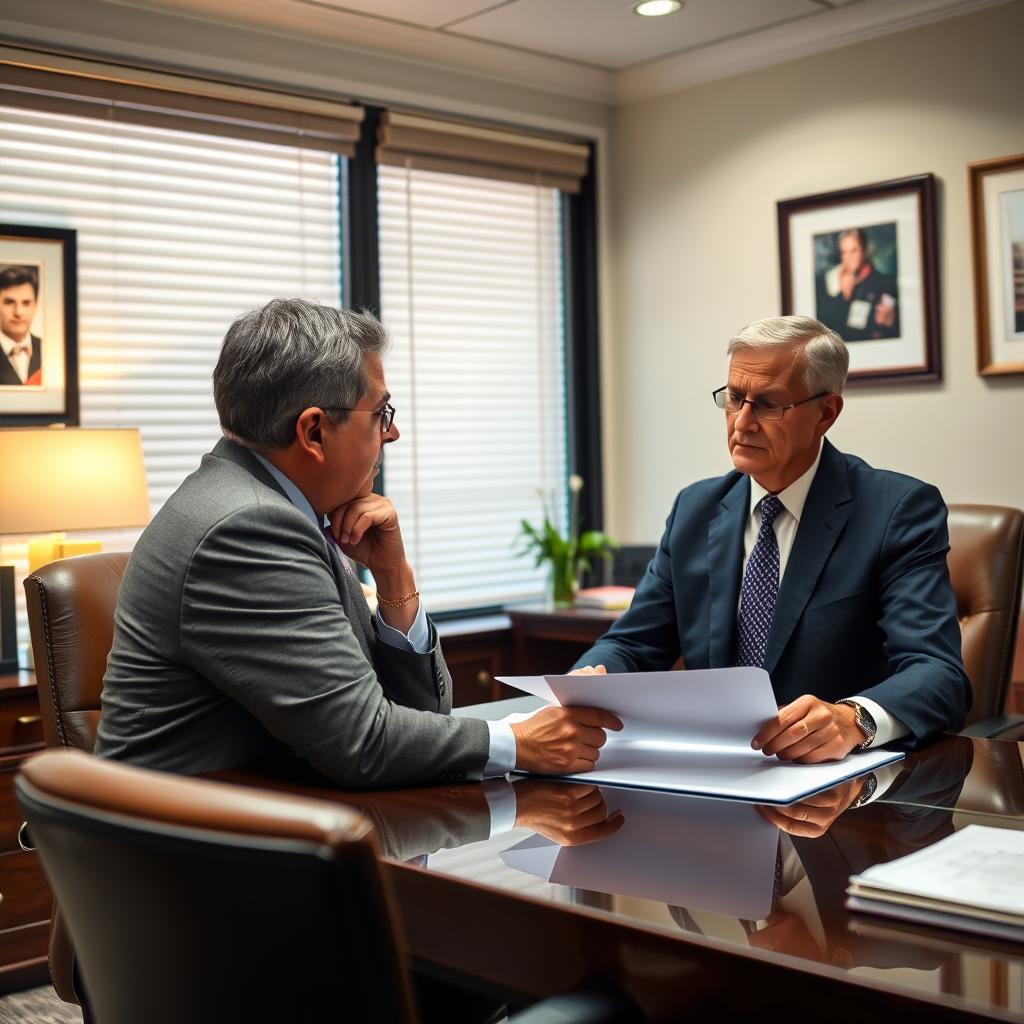
Armed Forces Divorce Lawyer Colonial Heights, VA
Military families face distinctive challenges when a marriage ends, and those stationed near Fort Gregg‑Adams or living in the Colonial Heights area need counsel who understands both Virginia divorce law and the federal protections that apply to service members. Law Offices Of SRIS, P.C., founded in 1997, concentrates a substantial portion of its practice on family law matters involving active‑duty personnel, reservists, and military retirees. Mr. Sris and his Of Counsel are experienced in navigating the interplay between the Servicemembers Civil Relief Act, the Uniformed Services Former Spouses’ Protection Act, and the equitable distribution framework that governs property division in Virginia. This page explains how armed forces divorce works in Colonial Heights, what issues commonly arise, and how the firm assists clients through the process. To request a consultation about a military divorce in Colonial Heights, Virginia, reach Law Offices Of SRIS, P.C. at (888) 437‑7747. Law Offices Of SRIS, P.C. – Advocacy Without Borders.
What Armed Forces Divorce Means in Colonial Heights, Virginia
Armed forces divorce is not a separate category of law but a subset of Virginia family law that applies whenever one or both spouses are current or former members of the uniformed services. Because Colonial Heights is a small independent city with direct access to Fort Gregg‑Adams—a major Army installation—a meaningful number of the divorce cases filed at the Colonial Heights Circuit Court involve parties with a military connection. The court at 550 Boulevard handles all divorces, including those where a service member asserts protections under the Servicemembers Civil Relief Act, which can stay proceedings while the member is on active duty. Military divorce cases also frequently raise questions about the division of a military pension, survivor benefit plan coverage, and the effect of a deployment on child custody and visitation schedules.
Virginia is an equitable distribution state, meaning the court divides marital property fairly but not necessarily equally. Va. Code § 20‑107.3 lists the factors the judge considers, including the duration of the marriage, each spouse’s contributions to the family’s well‑being, and the circumstances that led to the divorce. When a military pension is involved, the federal Uniformed Services Former Spouses’ Protection Act permits state courts to treat disposable retired pay as marital property, but only if the marriage lasted at least ten years overlapping with ten years of military service creditable toward retirement. Even when that threshold is not met, the court may award other assets to achieve an equitable result. Mr. Sris and his Of Counsel help clients in Colonial Heights identify all marital property and craft a strategy that reflects both Virginia case law and the federal statutes that overlay military divorces.
How Mr. Sris and His Of Counsel Handle Armed Forces Divorce Cases
A military divorce often begins with a threshold question: which state has jurisdiction, and whether the Servicemembers Civil Relief Act affects the timing. Because service members and their spouses may maintain legal residence in a state different from where they are stationed, establishing Virginia jurisdiction can require a careful review of domicile and the six‑month residency requirement under Va. Code § 20‑97. Once jurisdiction is secure, the case proceeds similarly to other Virginia divorces but with added layers: calculating the marital share of a military pension, addressing the service member’s potential right to a stay, and incorporating deployment-sensitive parenting plans.
From the initial consultation through the final decree, Mr. Sris and his Of Counsel work to resolve disputes efficiently while safeguarding a client’s rights under both state and federal law. The team prepares complaints, negotiates separation agreements, and, when necessary, litigates contested issues at the Colonial Heights Circuit Court. Matters such as spousal support, child support calculated under Virginia’s guidelines, and the classification of Thrift Savings Plan accounts receive focused attention. Because military pay structures can include base pay, allowances, and special pays that may or may not be treated as income for support purposes, presenting accurate financial data to the court is essential. Mr. Sris and his Of Counsel’s familiarity with military compensation documents helps them present a clear financial picture. Every case is approached with the understanding that a service member’s career demands can shift quickly, and the team adapts its approach accordingly. Results may vary.
About Mr. Sris and His Of Counsel Team
Mr. Sris, Owner and Founder of Law Offices Of SRIS, P.C., has concentrated his practice on family law and complex civil matters since 1997. He is admitted in Virginia, Maryland, the District of Columbia, New Jersey, and New York. Mr. Sris testified before the Virginia House Courts of Justice Committee in support of 2019 HB 635 (chief patron Del. David Bulova), a bill that revised the equitable distribution statute under which Virginia courts divide marital property. His understanding of how property division works at the statutory level informs the advice he provides to clients in Colonial Heights, particularly those who served or are serving in the armed forces and have retirement benefits subject to division.
Mr. Sris is supported by Of Counsel attorneys who collectively bring substantial courtroom experience to family law matters. The firm’s Richmond location—7400 Beaufont Springs Drive, Suite 300, Room 395, Richmond, VA 23225—serves clients throughout the Colonial Heights area, including the courts at 550 Boulevard. Mr. Sris and his Of Counsel bring over 120 years of combined legal experience, with 4,739+ documented firm-wide results. Results may vary. For a consultation about an armed forces divorce, call (888) 437‑7747. Consultations are by appointment.
Frequently Asked Questions
How is a military pension divided in a Virginia divorce?
A military pension is treated as marital property to the extent it was earned during the marriage, and Virginia courts can divide disposable retired pay under the Uniformed Services Former Spouses’ Protection Act if the ten‑year overlap requirement is met. Even without that overlap, the court may offset the pension’s value with other assets to achieve an equitable distribution under Va. Code § 20‑107.3. The actual division is accomplished through a court order that the Defense Finance and Accounting Service will honor only if the order meets specific federal requirements. An attorney can help draft the order correctly.
Can a service member delay a divorce while deployed?
Yes, under the Servicemembers Civil Relief Act a court must grant a stay of proceedings for at least 90 days if the service member’s military duties materially affect the ability to participate, and additional stays may be granted. The stay is not automatic; the service member or counsel must request it and provide a statement explaining how duty requirements impair the ability to appear. During the stay, temporary orders for child support or spousal support can still be entered. Once the stay expires or the member can participate, the case moves forward.
Does a military spouse receive support while the divorce is pending?
A military spouse may seek pendente lite spousal support under Va. Code § 20‑103 while the divorce is being litigated, and the court can award temporary support based on the parties’ current financial circumstances. The court considers the service member’s total compensation, including allowances, but some components may be exempt from garnishment. Child support is calculated using Virginia’s guidelines and can include provisions for health insurance and child‑care expenses that reflect the military family’s situation.
What custody issues arise when one parent is in the military?
Deployment and temporary duty assignments raise unique custody challenges, and Virginia courts can create parenting plans that accommodate a service member’s schedule while protecting the child’s best interests. Va. Code § 20‑124.3 lists ten best‑interest factors, and a parent’s military service is not a negative factor in itself. Courts may authorize electronic visitation, designate a temporary custodian during deployment, and require the non‑military parent to facilitate communication with the deployed parent. A well‑prepared custody proposal that addresses these contingencies can help avoid disruption for the child. India is not a signatory to the 1980 Hague Convention on Civil Aspects of International Child Abduction.
Do I need a lawyer for an armed forces divorce in Colonial Heights?
You are not legally required to hire a lawyer, but the interplay of Virginia divorce statutes and federal military protections makes self‑representation particularly challenging when military benefits are involved. A misstep in drafting a pension division order, for instance, can result in the loss of a former spouse’s share of retired pay. Legal counsel can also identify whether a fault ground such as adultery could affect property division, and negotiate a separation agreement that resolves all issues without trial. For guidance specific to your circumstances, reach Law Offices Of SRIS, P.C. at (888) 437‑7747.
Additional family law resources: Family law lawyer in Fairfax County | Family law lawyer in Fairfax City | Family law lawyer in Falls Church | Family law lawyer in Prince William County | Family law lawyer in Manassas
Virginia primary sources: Virginia Code Title 20 (Domestic Relations) | Virginia Courts | Colonial Heights Circuit Court
Attorney advertising. Prior results do not guarantee a similar outcome. Results may vary.
Case results depend on a variety of factors unique to each case.