
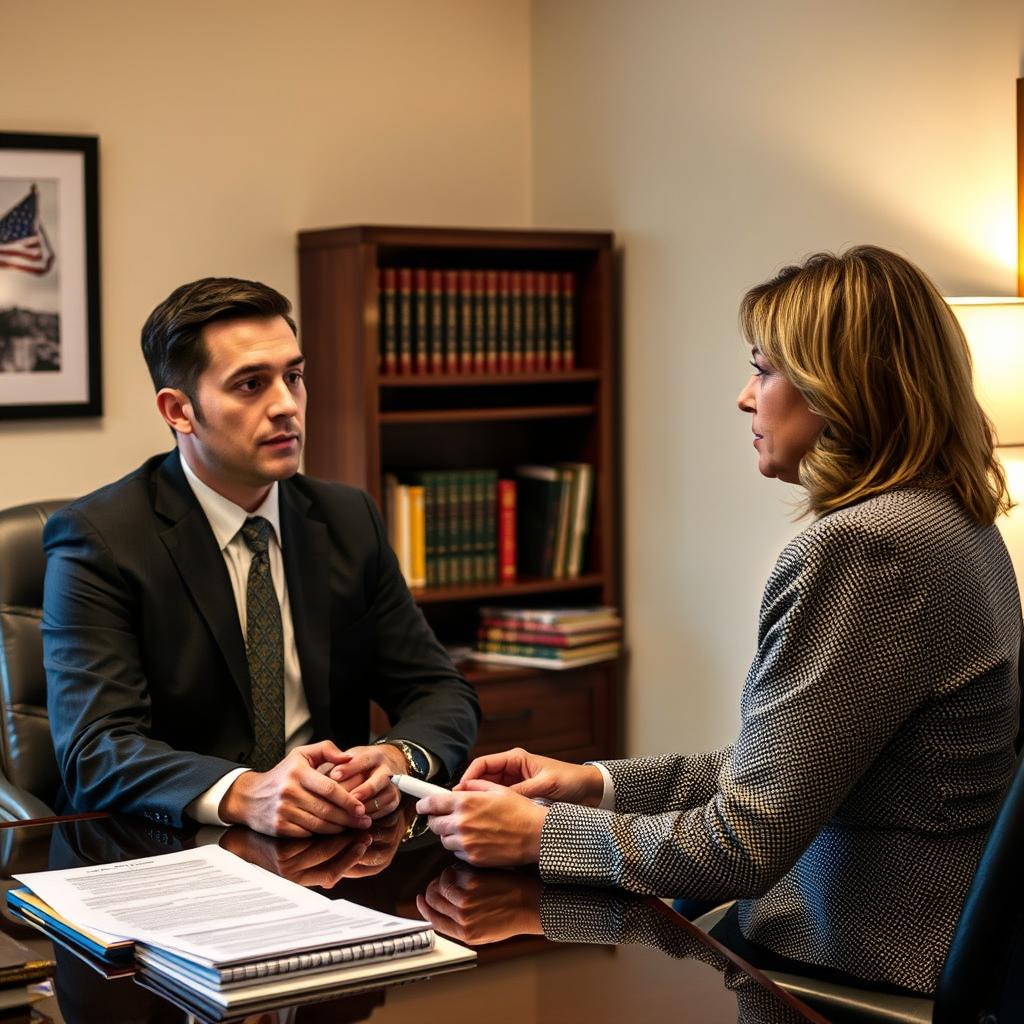
Armed Forces Divorce Lawyer Fluvanna County, VA
Service members, military spouses, and retired personnel in Fluvanna County face divorce issues that civilian couples rarely encounter—pension division under the Uniformed Services Former Spouses’ Protection Act, deployment-related custody modifications, Servicemembers Civil Relief Act stay protections, and jurisdictional questions when one spouse is stationed elsewhere. Law Offices Of SRIS, P.C., founded in 1997, concentrates its family law practice on these military-specific concerns. Mr. Sris and his Of Counsel appear in Fluvanna County Circuit Court, which holds exclusive divorce jurisdiction, and in the Fluvanna County Juvenile and Domestic Relations District Court, where custody and support matters proceed. From our Shenandoah location at 505 N Main St, Suite 103, Woodstock, we serve communities throughout the Sixteenth Judicial District—Palmyra, Fork Union, Lake Monticello, and beyond. To discuss your matter, reach us at (888) 437-7747. Law Offices Of SRIS, P.C. – Advocacy Without Borders.
What Armed Forces Divorce Means in Fluvanna County
Fluvanna County lies within Virginia’s Sixteenth Judicial District and is bordered by Albemarle County to the northwest, Louisa County to the northeast, Goochland County to the east, Cumberland County to the southeast, and Buckingham County to the southwest. The county seat, Palmyra, is home to the Fluvanna County Courthouse at 72 Main Street, Suite B—a consolidated courthouse that accommodates both the Circuit Court and the General District Court. Major routes through the county include U.S. Route 15, which runs north–south, and Virginia Routes 6 and 53, which provide east–west connections to Charlottesville and Richmond. The local population centers include the town of Palmyra, the census-designated places of Fork Union and Lake Monticello, and the area surrounding Fork Union Military Academy. Many residents are active-duty military, reservists, or retirees associated with nearby installations such as Fort Belvoir, Fort Lee, and the Defense Supply Center Richmond.
For an armed forces divorce in Fluvanna County, the Circuit Court has exclusive original jurisdiction under Va. Code § 20-96. Child custody, visitation, child support, and protective-order matters that are not consolidated into the divorce action proceed in the Juvenile and Domestic Relations District Court. India is not a signatory to the 1980 Hague Convention on Civil Aspects of International Child Abduction. Virginia law provides fault and no-fault grounds for divorce under Va. Code § 20-91. Service members and their spouses must meet the Commonwealth’s six-month domiciliary residency requirement in Va. Code § 20-97. Military members often satisfy this requirement through permanent change-of-station orders assigning them to a Virginia duty station, or through their spouse’s Virginia residency. The equitable distribution statute, Va. Code § 20-107.3, governs the classification and division of marital property, including military retired pay. Because a uniformed service member’s pension is frequently the largest asset in the marriage, tracing the marital share, determining the appropriate cost-of-living adjustments, and preparing a qualifying domestic relations order are central to every Fluvanna County military divorce. The court considers the eleven factors set out in § 20-107.3(E) when deciding whether to award a portion of the disposable retired pay to the non-member spouse. Our firm has represented service members and their spouses in dissolution proceedings across Virginia, and we are familiar with the local practices of the Fluvanna County courts.
Fluvanna County General District Court is currently presided over by Hon. Claiborne H. Stokes Jr. Court hours: Mon-Fri 8:30AM-4:30PM. Counsel appearing on family law matters should plan filings accordingly.
How Mr. Sris and His Of Counsel Handle Armed Forces Divorce Cases
When a client retains Law Offices Of SRIS, P.C. for a military divorce in Fluvanna County, the process begins with a comprehensive review of the parties’ military service records, leave and earnings statements, and any existing separation agreement. The Servicemembers Civil Relief Act allows an active-duty member to request a stay of proceedings if military duties materially affect the ability to participate in the litigation. Our firm coordinates with the service member’s command to ensure that court dates are set with due regard for deployment schedules and training obligations. At the same time, we work with the non-member spouse to assess the marital estate, identify community debts, and value military benefits—including the Thrift Savings Plan, SBP survivor benefit plan elections, and military medical coverage continuation.
Virginia law treats a military pension as marital property to the extent it accrued during the marriage. The seminal statute, Va. Code § 20-107.3(G), authorizes direct payment of a specified share of the retired pay to the former spouse, provided the court enters a qualifying order accepted by the Defense Finance and Accounting Service. Our legal team collaborates with forensic accountants and pension valuation attorneys when necessary to trace the marital portion and to ensure the proposed division complies with the “10-year/10-year” rule for direct DFAS payments. Custody-related issues—such as deployment-based visitation schedules, relocation requests under Va. Code § 20-124.5, and parenting plans that accommodate unpredictable military obligations—are negotiated with a focus on the best interests of the child under Va. Code § 20-124.3. When a full trial is required, our attorneys prepare a thorough presentation for the Fluvanna County Circuit Court judge. Throughout the case, we keep clients informed about the progress of their matter and advise them on the tax implications of property division and spousal support under current law.
About Mr. Sris and His Of Counsel Team
Mr. Sris, Owner and Founder of Law Offices Of SRIS, P.C., has practiced family law in Virginia since 1997. He is a former prosecutor whose experience in direct and cross-examination informs his approach to contested custody and equitable-distribution hearings. Mr. Sris testified before the Virginia House Courts of Justice Committee in support of 2019 HB 635 (chief patron Del. David Bulova). He is admitted to practice in Virginia, Maryland, the District of Columbia, New Jersey, and New York. Mr. Sris and his Of Counsel bring over 120 years of combined legal experience and have documented over 4,739 firm-wide results. Results may vary.
Our firm’s Of Counsel team supports military divorce cases with additional practice-area depth and multi-jurisdictional coverage. Every Of Counsel member is engaged through Excella and works collaboratively under Mr. Sris’s direction. The collective experience spans complex litigation, criminal law, business valuation, and immigration—all of which can intersect with a military dissolution matter. Whether your case calls for negotiating a settlement, preparing an expert witness, or presenting evidence at trial in the Palmyra courthouse, you benefit from a team that prepares each matter as if it will be tried.
Frequently Asked Questions
How does a Virginia court treat military retired pay in a divorce?
Virginia classifies the marital share of military retired pay as marital property subject to equitable distribution. Under Va. Code § 20-107.3, the court determines what portion of the pension accrued during the marriage and then divides it fairly between the spouses. The division is often effectuated through a domestic relations order submitted to the Defense Finance and Accounting Service. The court is not required to split the pension equally; it weighs the eleven statutory factors, including the length of the marriage, each spouse’s financial circumstances, and contributions to the service member’s career. Separate property—such as the portion of the pension earned before the marriage—is excluded from the marital estate. An experienced attorney can calculate the marital fraction and advocate for a division that reflects the unique circumstances of a military family.
Do I need to appear in person at the Fluvanna County Circuit Court for my divorce?
Virginia law ordinarily requires at least one party and a corroborating witness to appear at the final hearing for an uncontested divorce. For an uncontested armed forces divorce, the plaintiff’s testimony may establish jurisdiction and the grounds for dissolution, while a corroborating witness confirms the separation period. When a service member is deployed or stationed out of state, the court may permit testimony by deposition or by electronic means at the judge’s discretion. Contested proceedings generally require multiple appearances. Whether your case is likely to be resolved by agreement or by trial, the scheduling of hearings will depend on the court’s calendar and the parties’ availability. Our firm works with the clerk’s office to coordinate dates that account for military obligations.
What effect does deployment have on a custody or visitation order?
Virginia custody orders remain in effect during a parent’s deployment, but the court may enter a temporary visitation schedule to preserve the service member’s relationship with the child. The trusted-interests standard in Va. Code § 20-124.3 guides all custody decisions. A deploying parent can request that the court delegate visitation time to a family member—such as a grandparent—during the deployment period. When the service member returns, the deployment-related arrangement typically yields to the permanent order. Courts are generally reluctant to permanently alter custody based solely on military service, unless the deployment is unreasonably prolonged or the child’s circumstances have materially changed. Our legal team helps families craft parenting plans that anticipate deployment and provide clear protocols for communication and reunification.
Can I file for divorce in Fluvanna County if my spouse is stationed in another state?
Yes, so long as you or your spouse meets Virginia’s six-month domiciliary residency requirement under Va. Code § 20-97. If you have maintained a domicile in Fluvanna County for the requisite period while your spouse is stationed elsewhere pursuant to military orders, you may file your complaint in the Fluvanna County Circuit Court. Some service members elect to file in Virginia even when stationed out of state because Virginia law provides clear fault and no-fault grounds. The Servicemembers Civil Relief Act does not prevent a civilian spouse from initiating the proceeding; it may permit the service member to request a stay if military duties prevent a meaningful response. Before filing, it is prudent to confirm that Virginia has personal jurisdiction over both parties and that the division of pension benefits is likely to be enforced by the service member’s domicile state.
What steps should I take before meeting with a lawyer about a military divorce?
Gather your marriage certificate, the service member’s most recent leave and earnings statement, tax returns for the past three years, any existing separation agreement, and documents reflecting the dates of military service. A copy of the orders assigning you or your spouse to a Virginia duty station can help establish residency. If you own a home or other real property in Fluvanna County, bring the deed and current mortgage statement. If you have minor children, compile their school and medical records, and any emails or texts that discuss custody arrangements. Organizing this information before your first meeting allows your attorney to provide a focused analysis of the property, support, and custody issues. You are not expected to know every detail of the Uniformed Services Former Spouses’ Protection Act; the initial consultation is an opportunity to hear how the law applies to your specific situation.
How are child support and spousal support calculated for a military family?
Virginia child support guidelines, set out at Va. Code § 20-108.1, apply to military families and use the combined gross income of both parents. Basic pay, Basic Allowance for Housing, and Basic Allowance for Subsistence are includable; certain other allowances may be excluded or treated differently depending on tax treatment and the specific circumstances. Spousal support, governed by Va. Code § 20-107.1, is determined by thirteen factors, including the standard of living established during the marriage and the duration of the marriage. A military pension award under § 20-107.3 may affect the need for and amount of permanent support. The court also considers whether the non-member spouse requires time to complete education or training to become self-supporting. Because the interplay between support and property division is complex, a detailed analysis of the family’s financial picture is essential early in the case.
Virginia Code Title 20 (Domestic Relations) · Virginia’s Judicial System · Virginia State Bar
Attorney advertising. Prior results do not guarantee a similar outcome. Case results depend on a variety of factors unique to each case. Results may vary.