
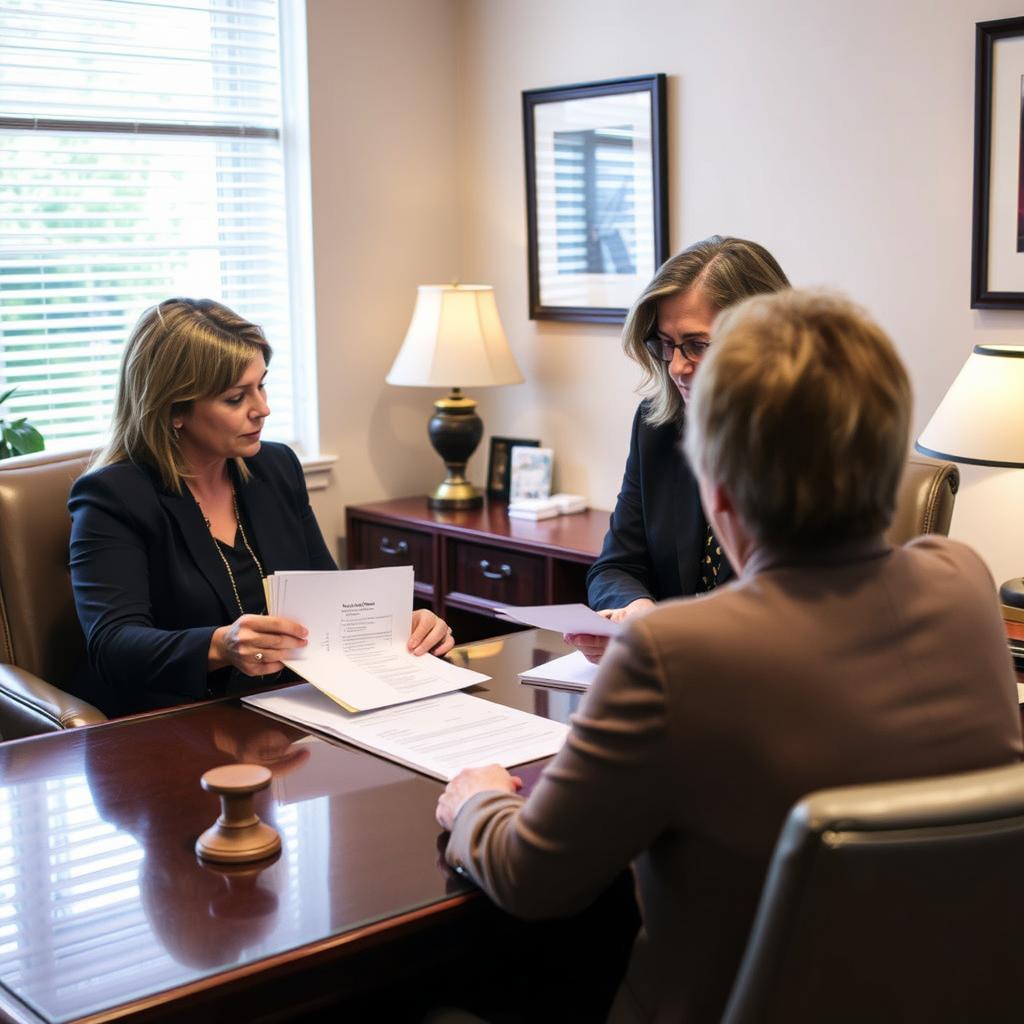
Fault Based Divorce Lawyer Rappahannock County, VA
When a marriage breaks down because of misconduct, Virginia law permits a spouse to file for a fault-based divorce. In Rappahannock County, these cases are heard in the Rappahannock County Circuit Court, located at 250 Gay Street, Suite 1, Washington, VA 22747. At Law Offices Of SRIS, P.C., Mr. Sris and his Of Counsel team represent clients who are pursuing—or responding to—a divorce grounded on fault. Whether the claim involves adultery, cruelty, desertion, or a felony conviction, the evidence and legal arguments presented at the Circuit Court can influence property division, spousal support, and even custody determinations. Mr. Sris, a former prosecutor who founded the firm in 1997, brings decades of courtroom experience to fault-based divorce litigation. He is admitted in Virginia, Maryland, the District of Columbia, New Jersey, and New York. The firm’s Fairfax location serves clients throughout Rappahannock County, including Washington, Sperryville, and Flint Hill. To discuss your situation, reach Law Offices Of SRIS, P.C. at (888) 437-7747. Law Offices Of SRIS, P.C. – Advocacy Without Borders.
What Fault-Based Divorce Means in Rappahannock County
Virginia is an equitable distribution state, not a community property state. Under Va. Code § 20-91, a spouse may seek a divorce on fault grounds rather than relying solely on a period of separation. The fault grounds recognized by Virginia law are adultery, cruelty or reasonable apprehension of bodily harm, willful desertion or abandonment for one year, and conviction of a felony resulting in imprisonment for more than one year. Unlike no-fault divorce—which requires either a six-month separation with no minor children and a signed agreement, or a one-year separation—a fault-based divorce carries no mandatory waiting period once the ground is established. This can accelerate the final resolution of the marriage, although the overall timeline still depends on discovery, motions practice, and the court’s calendar.
Rappahannock County Circuit Court is the court of exclusive original jurisdiction for divorce in this locality, as provided by Va. Code § 20-96. The court sits in Washington, Virginia, within the Twentieth Judicial District, and serves a rural community that includes the towns of Sperryville and Flint Hill. Because Rappahannock County shares judges and resources with neighboring Fauquier and Loudoun Counties, local practice can reflect the procedures of the broader circuit. When a divorce complaint alleging fault grounds is filed, the court will address property classification, equitable distribution under Va. Code § 20-107.3, child custody under the trusted-interests factors of § 20-124.3, and spousal support under § 20-107.1. A demonstrated fault ground can affect the court’s equitable distribution award and may influence spousal support determinations.
The evidentiary demands of a fault case are substantial. A spouse alleging adultery, for example, must prove the occurrence by clear and convincing evidence, which often requires circumstantial proof, witness testimony, and documentary exhibits. Mr. Sris and his Of Counsel team are experienced in managing the sensitive discovery and evidentiary challenges that arise in these matters, including the presentation of corroborating witness testimony that Virginia law requires in uncontested divorce hearings and that may be cited in contested proceedings as well. In Rappahannock County, the court expects parties to comply with local procedural rules and scheduling orders; experienced counsel can help navigate these expectations while building the record necessary to support or defend a fault claim.
How Mr. Sris and His Of Counsel Handle Fault-Based Divorce Cases
When a client approaches the firm about a fault-based divorce in Rappahannock County, Mr. Sris and his Of Counsel first conduct a thorough factual review. They evaluate the available evidence, assess the potential impact of the fault ground on property division and support, and advise the client on the practical implications of proceeding under a fault theory. If a fault ground is viable, the team prepares and files a Complaint for Divorce in the Rappahannock County Circuit Court, ensuring that all pleadings comply with Virginia’s procedural requirements.
After service of the complaint—which may be accomplished through the sheriff’s office, a private process server, or other authorized methods—the case enters the discovery phase. Discovery in a fault-based case often includes interrogatories, requests for production of documents, and depositions. In adultery cases, for instance, the discovery process may involve financial records, electronic communications, and testimony from witnesses who can corroborate the allegations. Mr. Sris draws on his prosecutorial background to assess the strength of the evidence and to identify gaps or inconsistencies that may influence the court’s evaluation. Throughout the litigation, the firm explores opportunities for settlement through negotiation or mediation. While neither mandatory in Virginia, mediated settlement agreements can resolve all issues without trial, preserving privacy and reducing litigation expense.
If the case proceeds to trial, Mr. Sris and his Of Counsel present the evidence in a clear, organized manner, adhering to the rules of evidence and procedure that govern the Circuit Court. They also address any pendente lite issues—such as temporary spousal support and custody—before the final hearing. Because fault-based divorce touches on intensely personal matters, the firm handles every case with discretion and professionalism, recognizing that the outcome can affect the family’s financial future and parenting relationships. As in every matter the firm undertakes, the goal is to work toward a resolution that aligns with the client’s objectives while complying fully with Virginia law and court rules.
About Mr. Sris and His Of Counsel Team
Mr. Sris, Owner and Founder of Law Offices Of SRIS, P.C., has practiced law since 1997. A former prosecutor, he is admitted in Virginia, Maryland, the District of Columbia, New Jersey, and New York. He concentrates his practice in family law, criminal defense, and immigration, and he has substantial experience handling complex divorce cases, including those involving claims of adultery, cruelty, and other fault grounds. Mr. Sris testified before the Virginia House Courts of Justice Committee in support of 2019 HB 635 (chief patron Del. David Bulova), which revised Va. Code § 20-107.3(g) concerning retirement plan distribution. His understanding of statutory interpretation and courtroom procedure informs his approach to each case.
Mr. Sris is supported by a group of Of Counsel attorneys who are engaged through Excella. Together, Mr. Sris and his Of Counsel bring over 120 years of combined legal experience, supported by 4,739+ documented firm-wide results. Results may vary. The team’s collective background includes prosecutorial experience, law enforcement service, and extensive trial advocacy in Virginia and other jurisdictions. On every fault-based divorce matter, the firm marshals the factual investigation, legal analysis, and courtroom skill necessary to present the client’s position effectively.
Frequently Asked Questions About Fault-Based Divorce in Rappahannock County
What are the grounds for a fault-based divorce in Virginia?
Virginia recognizes adultery, cruelty, desertion for one year, and felony conviction with imprisonment for more than one year as fault grounds. These grounds are set out in Va. Code § 20-91. Unlike no-fault divorce, which requires a separation period, a fault-based divorce can proceed without waiting once the ground is proved. The Rappahannock County Circuit Court hears all fault-based divorce complaints and applies the relevant legal standards to the evidence presented. A finding of fault can influence property division and spousal support, so it is important to develop the evidence carefully.
How does fault affect property division in a Rappahannock County divorce?
The court considers the circumstances that contributed to the dissolution of the marriage, including fault, when dividing property under Virginia’s equitable distribution statute. Under Va. Code § 20-107.3, the court weighs eleven factors, and the adverse conduct of a spouse—such as proven adultery or cruelty—can result in a distribution that departs from a mathematically equal split. The Rappahannock County Circuit Court has the authority to classify and value marital and separate property and to award a share that reflects the equities of the case.
Do I need corroborating evidence to prove a fault ground?
Yes, Virginia law requires corroborating testimony in uncontested divorces, and in contested fault trials, corroboration strengthens the case substantially. A spouse alleging adultery, for example, must present clear and convincing evidence, which often includes witness testimony, documentary proof, and circumstantial evidence. The Rappahannock County Circuit Court expects the party pleading fault to meet the applicable burden of proof. Mr. Sris and his Of Counsel team assist clients in gathering admissible evidence and identifying witnesses who can testify in compliance with the court’s procedures.
How long does a fault-based divorce take in Rappahannock County?
The timeline depends on whether the divorce is contested, the complexity of discovery, and the court’s docket. Because fault grounds eliminate the separation waiting period, the case can move to trial more quickly than a no-fault divorce, but contested discovery and motion practice can extend the schedule. The Rappahannock County Circuit Court sets its own calendar, and cases that settle before trial resolve sooner. Mr. Sris and his Of Counsel work to advance the matter efficiently while protecting the client’s interests.
Can I obtain spousal support based on the other spouse’s fault?
Proven fault can influence the court’s decision to award spousal support, though support is determined by a range of factors under Virginia law. Under Va. Code § 20-107.1, the court considers thirteen factors, including the relative earning capacities of the parties and the circumstances that led to the divorce. Adultery, cruelty, or desertion may weigh heavily in the court’s support determination. The Rappahannock County Circuit Court has jurisdiction to enter a spousal support order as part of the divorce decree.
Do I need a lawyer to file a fault-based divorce in Rappahannock County?
You are not legally required to hire a lawyer, but fault-based divorce involves complex evidentiary standards and procedural rules that make experienced representation advisable. The Circuit Court requires pleadings that comply with the Virginia Code and local rules, and evidentiary missteps can jeopardize the case. To discuss your matter with Mr. Sris and his Of Counsel, contact Law Offices Of SRIS, P.C. at (888) 437-7747.
Related Virginia Family Law Pages: Fairfax County Family Law Attorney · Prince William County Family Law Attorney · Manassas Family Law Attorney · Falls Church Family Law Attorney.
Official Virginia Resources: Virginia Code Title 20 – Domestic Relations · Rappahannock County Court Information
Attorney advertising. Prior results do not guarantee a similar outcome. Results may vary.
Case results depend on a variety of factors unique to each case.