
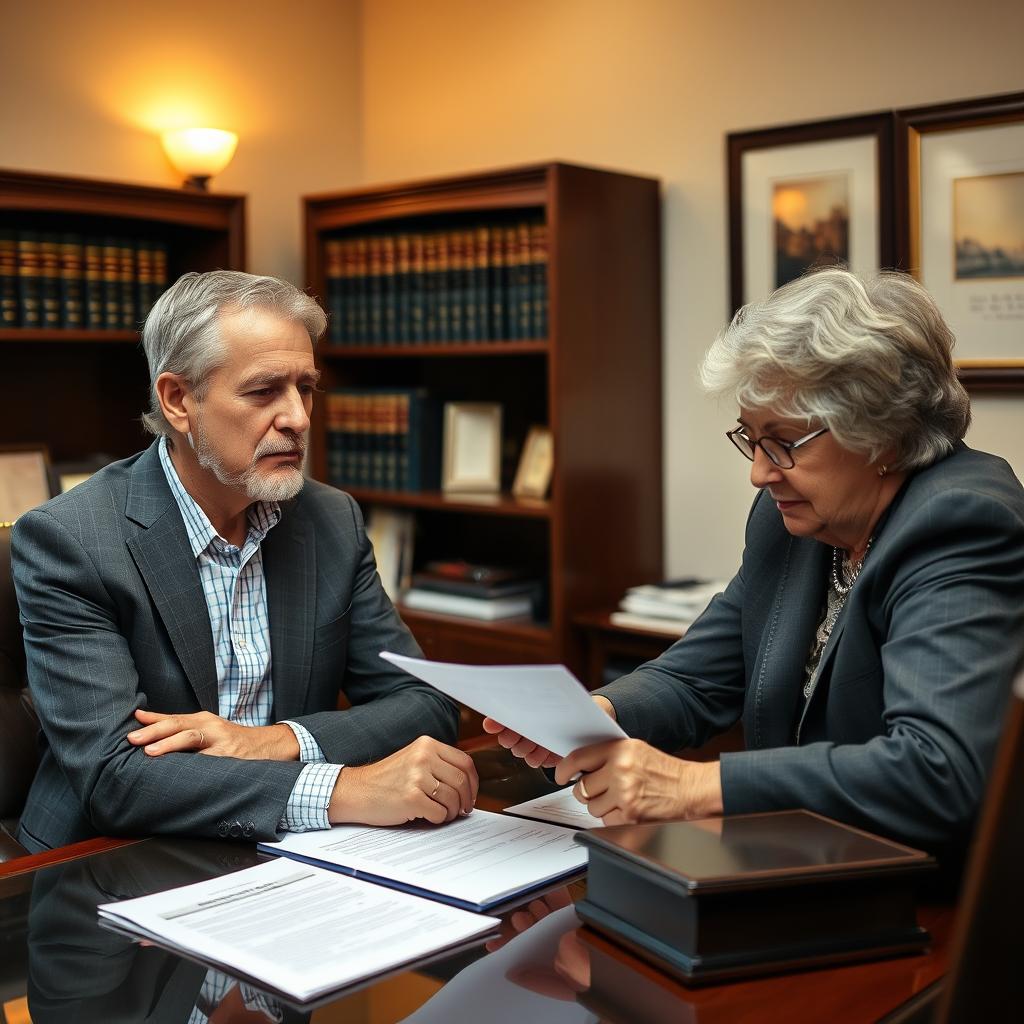
Marital Property Lawyer Fauquier County, VA
Dividing property in a Fauquier County divorce is governed by Virginia’s equitable distribution statute, Va. Code § 20‑107.3. The Fauquier County Circuit Court, located at 6 Court Street in Warrenton, has exclusive original jurisdiction over divorce and the division of marital assets. Whether you own a family business, a retirement account, real estate, or commingled assets, the classification and valuation of that property will determine what you walk away with. Mr. Sris and the firm’s Of Counsel attorneys concentrate on identifying and valuing marital property, tracing separate property, and presenting evidence to the court. The goal is a division that is fair, not necessarily equal; the judge weighs multiple statutory factors, and an experienced advocate can make a meaningful difference in how those factors are applied. Reach Law Offices Of SRIS, P.C. at (888) 437‑7747 to request a consultation. Law Offices Of SRIS, P.C. – Advocacy Without Borders.
What Marital Property Means in Fauquier County, Virginia
In Virginia, marital property is any asset acquired by either spouse during the marriage, regardless of whose name is on the title, except property received by gift or inheritance from a third party. Separate property—assets owned before the marriage or acquired by gift or inheritance during the marriage—remains with the original owner. However, if separate and marital funds are mixed, the property may become hybrid, and the court must trace the contributions to determine the marital share.
Fauquier County Circuit Court handles all equitable distribution matters as part of the divorce proceeding. The court follows Va. Code § 20‑107.3, which lists eleven factors, including the monetary and non‑monetary contributions of each spouse, the duration of the marriage, the age and health of the parties, and the tax consequences of the division. The judge has broad discretion to award a percentage of each asset, a monetary sum, or a combination of both. For high‑value or complex assets—such as a closely held business, professional practice, multiple real estate holdings, or deferred compensation plans—the court frequently looks to experienced attorney valuation testimony. The final decree must itemize each asset and its recipient, so the identification stage is critical; overlooked assets can lead to an unfavorable outcome that is difficult to reopen.
Residents of Warrenton, New Baltimore, Bealeton, Marshall, The Plains, and the surrounding communities in Fauquier County are served by the Fairfax Location of Law Offices Of SRIS, P.C. The firm’s attorneys appear regularly at the Fauquier County courts and are familiar with local procedures, including the requirements for corroborating witnesses in uncontested matters and the scheduling practices for pendente lite hearings.
How Mr. Sris and the Firm’s Of Counsel Attorneys Handle Marital Property Cases
The firm begins with a thorough inventory of all assets and debts. Attorneys work with clients to gather financial records, deeds, account statements, and business documents. Where separate property is asserted, the team traces the source of funds and constructs a timeline to establish the character of each asset. If an asset’s value is disputed—a business, a retirement account with a marital and pre‑marital component, or unique personal property—the firm collaborates with qualified valuation professionals to prepare admissible evidence.
After classification and valuation, the focus shifts to a resolution strategy. Many Fauquier County marital property disputes are resolved through a negotiated separation agreement that spells out the division of each asset. Mr. Sris and the firm’s Of Counsel attorneys negotiate from a position informed by what the court is likely to order if the case goes to trial. When agreement is not possible, the attorneys prepare the case for contested hearing before the Fauquier County Circuit Court, presenting lay and expert testimony and arguing the statutory factors. Throughout the process, the client is kept informed of the strengths and vulnerabilities of the position, so decisions are made with a clear understanding of the likely range of outcomes.
About Mr. Sris and the Firm’s Of Counsel Attorneys
Mr. Sris, Owner and Founder of Law Offices Of SRIS, P.C., has practiced law since 1997. He is a former prosecutor and has extensive background in Virginia courtrooms. Mr. Sris testified before the Virginia House Courts of Justice Committee in support of 2019 HB 635 (chief patron Del. David Bulova), a bill that revised the equitable distribution statute governing retirement and pension division. The firm’s Of Counsel attorneys further strengthen the family law practice, bringing experience in complex property division, business valuation, and domestic relations litigation. Together, they appear in Fauquier County courts and throughout Northern Virginia, working to achieve favorable outcomes. Prior results do not guarantee a similar result. Results may vary.
Frequently Asked Questions
How is marital property divided in a Fauquier County divorce?
Virginia divides marital property equitably—meaning fairly, not necessarily 50/50—under Va. Code § 20‑107.3. The Fauquier County Circuit Court judge evaluates eleven statutory factors, including each spouse’s contributions to the marriage and the duration of the union. The court can award a specific asset to one party or order a monetary payment to balance the division. Classification of assets as marital or separate is the first step, and the final decree must list every piece of property and its recipient.
What is the difference between marital and separate property in Virginia?
Marital property is everything acquired during the marriage by either spouse, aside from gifts or inheritances received from a third party. Separate property is what a spouse owned before the marriage or received individually by gift or inheritance during the marriage. When separate and marital assets are mixed—for example, a pre‑marital account used for joint expenses—tracing is required to segregate the marital share. The distinction is critical because separate property is not divided by the court.
Can a prenuptial agreement affect property division in Fauquier County?
Yes, a valid prenuptial agreement under Virginia’s Premarital Agreement Act (Va. Code § 20‑147 et seq.) can override the default equitable distribution rules. The agreement must be in writing, signed voluntarily, and must include full financial disclosure or a knowing waiver of disclosure. Courts in Fauquier County will enforce the agreement unless it was procured by fraud, duress, or is unconscionable at the time of enforcement. A well‑drafted prenuptial agreement provides a clear roadmap for property division and can reduce litigation.
How does the court value a business in a Fauquier County divorce?
The court relies on financial records, tax returns, and often expert testimony to determine the fair market value of a business. Valuation methods include the asset approach, income approach, or market approach. The judge must decide whether any portion of the business is separate property and then apply equitable distribution factors to the marital share. Because business valuation can be contentious, early engagement of a qualified valuation professional is typical. The firm works with recognized attorneys to present valuation evidence at trial if a settlement cannot be reached.
Do I need a lawyer for a marital property dispute in Fauquier County?
You are not required to have an attorney, but the equitable distribution process is legally complex and the stakes involve your financial future. An attorney can identify hidden assets, trace separate property, present valuation evidence, and argue the statutory factors to the court. Procedural missteps—such as failing to raise a claim for equitable distribution before a divorce is finalized—can result in a permanent loss of rights. For guidance specific to your situation, contact Law Offices Of SRIS, P.C. at (888) 437‑7747.
What does “equitable distribution” actually mean?
Equitable distribution means the court divides marital property in a manner it considers fair, not a rigid 50‑50 split. Judges balance factors such as each spouse’s contributions (including non‑economic contributions like homemaking), the length of the marriage, the age and health of the parties, and the tax consequences of the division. The judge has broad discretion, so the same set of facts can lead to different outcomes. The goal of experienced counsel is to frame the facts to support a distribution that best protects the client’s long‑term interests.
Additional family law resources for Northern Virginia:
Family Law Attorney in Fairfax County |
Family Law Attorney in Prince William County |
Family Law Attorney in Stafford County |
Family Law Attorney in Loudoun County |
Family Law Attorney in Arlington County
Official Virginia legal sources:
Virginia Code § 20‑107.3 – Equitable Distribution |
Virginia’s Judicial System
Attorney advertising. Prior results do not guarantee a similar outcome. Results may vary.
Case results depend on a variety of factors unique to each case.