
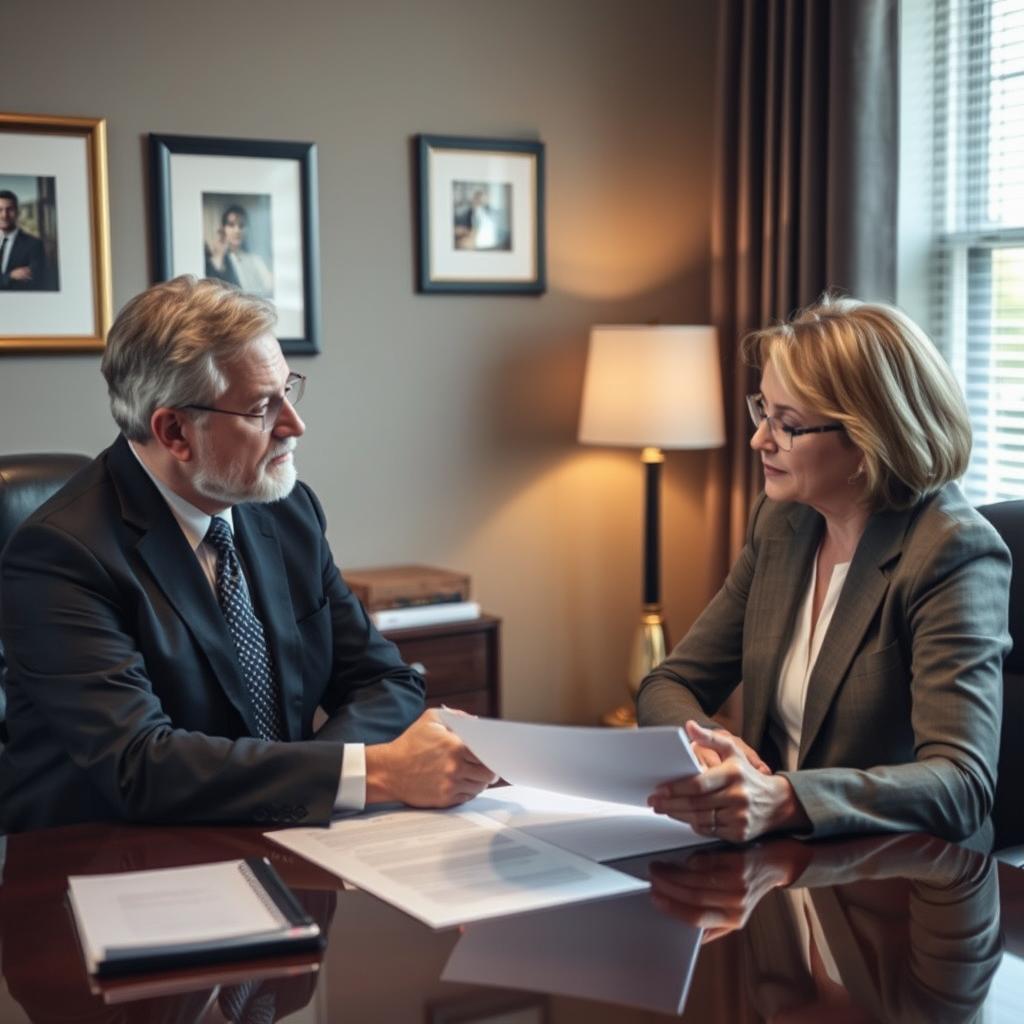
Norfolk Military Divorce Lawyer Fauquier County, VA
The intersection of military service and divorce raises distinctive legal questions. Service members, their spouses, and former spouses navigating the end of a marriage must contend not only with Virginia’s family law framework but also with federal statutes such as the Servicemembers Civil Relief Act (SCRA) and the Uniformed Services Former Spouses’ Protection Act (USFSPA). While Norfolk is the hub of the largest naval concentration in the world, military families live and maintain residences across the Commonwealth, including in Fauquier County. Mr. Sris and his Of Counsel at Law Offices Of SRIS, P.C. represent both service members and military spouses in divorce and related family law matters throughout Virginia, including in the Fauquier County Circuit Court and Juvenile and Domestic Relations District Court. Whether the case involves division of a military pension, jurisdictional questions arising from frequent relocations, or the interplay between Virginia equitable distribution and federal retired pay rules, the firm brings multi-state experience to each matter. To discuss your situation with a lawyer who concentrates on military divorce in Fauquier County, call (888) 437-7747. Law Offices Of SRIS, P.C. – Advocacy Without Borders.
What Family Law Means in Fauquier County
Fauquier County, located in Virginia’s northern Piedmont region, is part of the Twentieth Judicial District. Family law matters that involve divorce, equitable distribution of property, spousal support, and child custody are primarily heard in the Fauquier County Circuit Court at 6 Court Street in Warrenton. The Fauquier County Juvenile and Domestic Relations District Court handles standalone custody, visitation, child support, and protective order cases. Residents of Warrenton, New Baltimore, Bealeton, Marshall, The Plains, and neighboring communities access these courts for family law proceedings.
Military families who maintain a residence in Fauquier County may file for divorce in the circuit court, provided Virginia’s residency and domiciliary requirements are met. One party must have been a bona fide resident and domiciliary of Virginia for at least six months before filing. The court has the authority to divide marital property equitably under Virginia Code § 20-107.3, classify assets such as military retired pay as marital or separate property, and determine spousal support under § 20-107.1. Because Norfolk is approximately 200 miles southeast of Fauquier, a service member stationed at Naval Station Norfolk may still choose to file in the county where the family resides. Mr. Sris and his Of Counsel appear regularly in Fauquier County courts on behalf of clients facing these multi-faceted legal issues.
Our Fairfax Location, situated at 4008 Williamsburg Court in Fairfax, Virginia, serves clients throughout Fauquier County. Major highways such as I-66, Route 29, and Route 17 provide convenient access for consultations. To schedule an appointment, call (888) 437-7747.
How Mr. Sris and His Of Counsel Handle Military Divorce Cases
A military divorce differs from a purely civilian divorce in several important respects. Federal law provides service members with protections against default judgments through the SCRA, which can stay proceedings if military duties materially affect the member’s ability to participate. The division of military retired pay is governed by the USFSPA, which permits state courts to treat disposable retired pay as marital property subject to division, provided certain jurisdictional requirements are satisfied. Virginia equitable distribution law then determines how much of that retired pay is marital and how it should be allocated between the spouses.
Mr. Sris and his Of Counsel approach each military divorce by first identifying the applicable statutes and regulations, then assessing the unique facts of the marriage. They evaluate whether the ten-year overlap rule under the USFSPA is relevant for direct payment from the Defense Finance and Accounting Service, examine the impact of the SCRA on case timelines, and address child custody and support in light of deployment schedules. Because the firm concentrates its practice on Virginia family law, its lawyers are familiar with the procedural expectations of the Fauquier County Circuit Court and the Juvenile and Domestic Relations District Court. Every matter is handled with attention to detail, and the firm works to resolve disputes through negotiation where possible while preparing thoroughly for trial when litigation becomes necessary.
About Mr. Sris and His Of Counsel Team
Mr. Sris, Owner and Founder of Law Offices Of SRIS, P.C., has practiced law since 1997. A former prosecutor, he brings insight into courtroom dynamics that benefits clients in contested divorce proceedings. He testified before the Virginia House Courts of Justice Committee in support of 2019 HB 635 (chief patron Del. David Bulova). Mr. Sris is admitted to practice in Virginia, Maryland, the District of Columbia, New Jersey, and New York. Mr. Sris and his Of Counsel bring over 120 years of combined legal experience and have achieved 4,739+ documented firm-wide results. Results may vary.
The Of Counsel team consists of attorneys who are engaged through Excella and who concentrate their practices in areas including family law, criminal defense, and traffic matters. On military divorce cases, Mr. Sris works collaboratively with his Of Counsel to develop strategy and ensure that clients receive thorough representation. The firm’s collective experience spans equitable distribution of military pensions, international custody disputes, and complex support calculations.
Frequently Asked Questions
What makes a military divorce different from a civilian divorce in Virginia?
A military divorce is governed by the same Virginia divorce statutes as a civilian divorce, but federal laws such as the SCRA and USFSPA impose additional procedural and property-division rules that do not apply in non-military cases. The SCRA allows a service member to request a stay of proceedings when military obligations prevent participation. The USFSPA authorizes state courts to divide disposable military retired pay as marital property, provided the service member’s legal residence or domicile is in the state, or the member consents to jurisdiction. Child custody and visitation orders must also account for deployment schedules and the potential for relocation. An attorney experienced in both Virginia family law and the federal military framework can help navigate these overlapping regimes.
How does the SCRA affect a military divorce case?
The Servicemembers Civil Relief Act can delay a divorce case if the service member demonstrates that military duty materially affects the ability to defend or participate in the proceeding. A court must grant a stay of at least 90 days upon a proper application, and additional stays may be granted. The SCRA also provides protections against a default judgment being entered without the service member’s knowledge. While the SCRA does not permanently halt a case, it requires careful attention to notice and timing. Mr. Sris and his Of Counsel are experienced in handling cases where one party is on active duty and can advise on how the SCRA may influence scheduling and strategy in Fauquier County courts.
Can I file for divorce in Fauquier County if my spouse is stationed in Norfolk?
Yes, you may file for divorce in Fauquier County if you or your spouse meets Virginia’s residency requirement and the filing takes place in the appropriate circuit court. Virginia law requires that at least one party has been a bona fide resident and domiciliary of the Commonwealth for six months before filing. If you reside in Fauquier County and intend to remain there, the Fauquier County Circuit Court has jurisdiction to grant a divorce, regardless of where the military spouse is stationed. However, the division of military retired pay requires the court to have personal jurisdiction over the service member, which may be obtained through consent or other statutory grounds. Consult with counsel to confirm that all jurisdictional requirements are satisfied before filing.
How are military pensions divided in a Virginia divorce?
Under the Uniformed Services Former Spouses’ Protection Act, state courts may treat disposable military retired pay as marital property, and Virginia’s equitable distribution statute then governs how that pay is divided between the spouses. The court must first classify the portion of the pension earned during the marriage as marital property. It considers factors such as the length of the marriage, the contributions of each party, and the economic circumstances of the spouses. The USFSPA’s “ten-year overlap” rule does not prevent a court from dividing the pension; rather, it determines whether direct payment from the Defense Finance and Accounting Service is available. A qualified domestic relations order or other appropriate order may be necessary to effectuate the division.
Does Virginia require separation before filing for a military divorce?
Virginia does not require separation before filing, but a separation period is a prerequisite for a no-fault divorce on the grounds of living separate and apart. For a no-fault divorce with no minor children and a signed separation agreement, the required separation is six months; otherwise, it is one year. Fault-based grounds such as adultery or cruelty do not require a separation period. Military couples who wish to divorce without alleging fault must satisfy the applicable separation period. During separation, the parties may live apart under one roof only if the court finds they have discontinued marital cohabitation and the intent to separate is clear. An attorney can advise whether a no-fault or fault-based approach best fits the circumstances.
Do I need a lawyer for a military divorce in Fauquier County?
You are not legally required to hire a lawyer, but military divorce involves complex federal and state laws that can affect property division, support, and custody; legal guidance helps protect your interests. Issues such as the division of military retired pay, the application of the SCRA, and the treatment of Survivor Benefit Plan coverage often require careful legal analysis. A lawyer with experience handling military divorces in Virginia can identify pitfalls and help negotiate a settlement or litigate disputed matters. To discuss your specific case with Mr. Sris and his Of Counsel, call (888) 437-7747.
For neighboring counties, see our pages: Fairfax County divorce lawyer, Prince William County family law attorney, Stafford County divorce representation, Loudoun County family lawyer, and Arlington County divorce attorney.
Primary legal sources: Virginia Code Title 20 — Domestic Relations · Fauquier County Circuit Court · Virginia Judicial System.
Attorney advertising. Prior results do not guarantee a similar outcome. Results may vary.
Case results depend on a variety of factors unique to each case.