
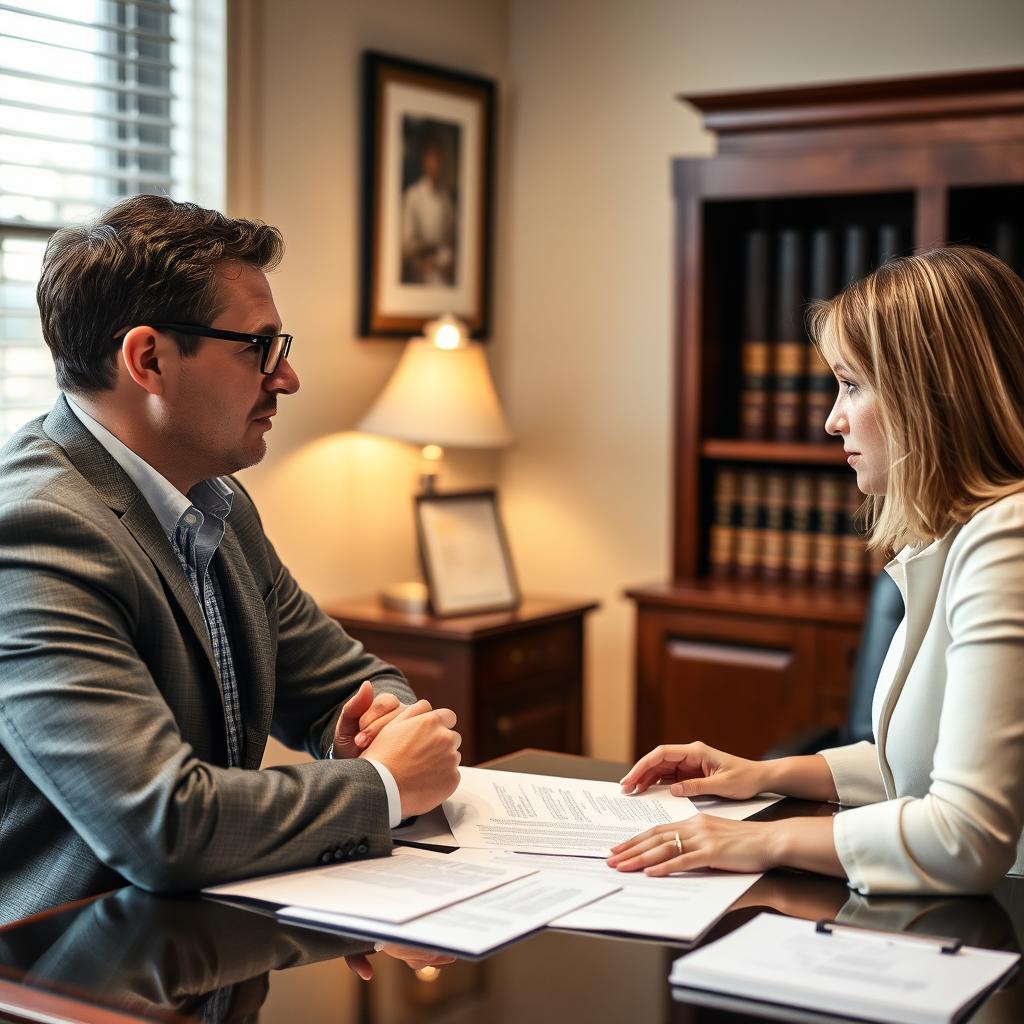
Postnuptial Agreement Lawyer Dinwiddie County, VA
Postnuptial agreements allow married couples in Virginia to define property rights, support obligations, and other financial matters during the marriage, rather than waiting until a separation or divorce. In Dinwiddie County, these agreements are governed by the Virginia Premarital Agreement Act, Va. Code § 20‑147 et seq., and are enforceable in the Dinwiddie County Circuit Court. A well‑drafted postnuptial agreement can clarify how assets, debts, and future income will be treated, reducing uncertainty for both spouses. Whether you are considering a postnuptial agreement to protect a family business, to address a change in financial circumstances, or to reinforce estate‑planning goals, an experienced family law attorney can help you evaluate your options. Mr. Sris and the firm’s Of Counsel attorneys assist clients throughout Dinwiddie County—including Dinwiddie, McKenney, and surrounding communities—with the negotiation, drafting, and review of postnuptial agreements. To schedule a consultation, call (888) 437‑7747. Law Offices Of SRIS, P.C. – Advocacy Without Borders.
What Postnuptial Agreements Mean in Dinwiddie County, Virginia
Under Virginia law, a postnuptial agreement is a contract between spouses that addresses the division of property, spousal support, and other financial rights in the event of divorce or death. Unlike a prenuptial agreement, which is executed before marriage, a postnuptial agreement is entered into after the wedding. Dinwiddie County courts—specifically the Circuit Court for equitable distribution matters and the Juvenile and Domestic Relations District Court for issues involving children—apply the same standards of enforceability to postnuptial agreements as to prenuptial agreements, provided the agreement is in writing, signed by both parties, and entered into voluntarily with fair and reasonable disclosure.
Dinwiddie County lies within Virginia’s 11th Judicial District and is served by the circuit and district courts at the Dinwiddie Courthouse. Because Virginia is an equitable distribution state, marital property is divided fairly but not necessarily equally. A postnuptial agreement can override the default equitable‑distribution factors set out in Va. Code § 20‑107.3 by specifying how particular assets or debts will be treated. For couples in Dinwiddie County, having a valid postnuptial agreement in place can streamline any future legal proceedings and provide peace of mind about the financial architecture of the marriage.
How Mr. Sris and the Firm’s Of Counsel Attorneys Handle Postnuptial Agreement Cases
Mr. Sris and the firm’s Of Counsel attorneys take a thorough, client‑focused approach to postnuptial agreement matters. The process begins with a detailed consultation to understand each spouse’s goals, current financial picture, and any concerns about the future. The firm then drafts an agreement that complies with Virginia law, ensuring that all disclosures are complete and that the terms are clear and equitable. Throughout the negotiation, the attorneys work to protect the client’s interests while fostering a cooperative environment that reduces conflict.
If a dispute arises over the validity or enforcement of an existing postnuptial agreement, the firm represents clients in Dinwiddie County Circuit Court. Challenges to postnuptial agreements often involve allegations of coercion, inadequate disclosure, or unconscionability. Mr. Sris’s litigation experience and the firm’s familiarity with Dinwiddie County court procedures allow them to present a well‑supported argument to the court. The firm focuses on achieving a practical resolution that serves the client’s long‑term objectives.
About Mr. Sris and the Firm’s Of Counsel Attorneys
Mr. Sris is Owner and Founder of Law Offices Of SRIS, P.C., a firm practicing since 1997. A former prosecutor, he brings a practical understanding of courtroom dynamics to every family law matter. Mr. Sris testified before the Virginia House Courts of Justice Committee in support of 2019 HB 635 (chief patron Del. David Bulova). He is admitted to practice in Virginia, Maryland, the District of Columbia, New Jersey, and New York.
The firm’s Of Counsel attorneys add depth to the family law practice. Collectively, Mr. Sris and the firm’s Of Counsel attorneys bring extensive legal experience to postnuptial agreement matters in Dinwiddie County. They are supported by a team that includes Spanish‑ and Tamil‑speaking professionals, ensuring that clients from diverse backgrounds receive clear communication throughout the process.
Frequently Asked Questions
Are postnuptial agreements enforceable in Virginia?
Yes, postnuptial agreements are generally enforceable in Virginia if they meet the statutory requirements of the Premarital Agreement Act. The agreement must be in writing, signed by both spouses, and entered into voluntarily. Both parties must provide fair and reasonable disclosure of their assets and liabilities, or expressly waive that right in writing. A Dinwiddie County Circuit Court judge will not enforce a postnuptial agreement that is found to be unconscionable when executed. Challenges often focus on whether one spouse was pressured into signing or whether the agreement was fair at the time it was made. To discuss the enforceability of a postnuptial agreement in your situation, contact Law Offices Of SRIS, P.C. at (888) 437‑7747.
What issues can a postnuptial agreement address in Dinwiddie County?
A postnuptial agreement can cover property classification, division of marital assets and debts, spousal support, and the management of financial accounts during the marriage. Couples often use them to protect a family business acquired during the marriage, to address inherited property, or to set out the financial terms that would apply if the marriage ends. Postnuptial agreements cannot determine child custody or child support, as those issues are always subject to court review based on the child’s best interests. In Dinwiddie County, the same agreement can include provisions for both equitable distribution in the Circuit Court and support matters that may later come before the Juvenile and Domestic Relations District Court.
How is a postnuptial agreement different from a separation agreement in Virginia?
A postnuptial agreement is made while the couple intends to remain married, whereas a separation agreement is made when spouses have decided to separate or divorce. Separation agreements typically resolve all issues—property, support, custody—in anticipation of an immediate divorce filing. A postnuptial agreement, by contrast, is forward‑looking; it sets the rules for the marriage while the couple remains together, often to provide financial clarity or to protect assets. Both documents are contracts and must meet Virginia’s requirements for validity. Because a separation agreement is a critical step toward divorce, its terms are subject to court approval in the final decree. A postnuptial agreement may be incorporated into a later separation agreement or divorce decree if the couple eventually separates.
Do I need a lawyer to create a postnuptial agreement in Dinwiddie County?
Virginia law does not require each spouse to have separate legal counsel to enter a postnuptial agreement, but independent counsel is strongly advisable to ensure the agreement is enforceable. A court may look more favorably on an agreement where both parties had the opportunity to consult with attorneys before signing. An experienced family law attorney can help you understand your rights, negotiate terms that protect your interests, and draft an agreement that complies with the Premarital Agreement Act. If you later face a challenge to the agreement, having been advised by counsel can strengthen your position. For a consultation about postnuptial agreements, reach Mr. Sris and the firm’s Of Counsel attorneys at (888) 437‑7747.
What if my spouse refuses to sign a postnuptial agreement?
You cannot force a spouse to sign a postnuptial agreement; the agreement must be voluntary to be enforceable. If your spouse is unwilling to negotiate, you may still take other steps to protect your financial interests, such as keeping detailed records of separate property and consulting with an attorney about your options. In some cases, making the case for why the agreement benefits both parties—for example, by providing clarity about business succession or inheritance plans—can open a dialogue. Even if an agreement is not possible now, understanding Virginia’s equitable distribution laws can help you plan for the future. To explore alternatives, contact Law Offices Of SRIS, P.C.
Family law attorney Fairfax County | Family law lawyer Prince William County | Family law in Manassas
Additional resources:
Virginia Code Title 20 (Domestic Relations) |
Virginia Circuit Courts
Attorney advertising. Prior results do not guarantee a similar outcome. Case results depend on a variety of factors unique to each case.