
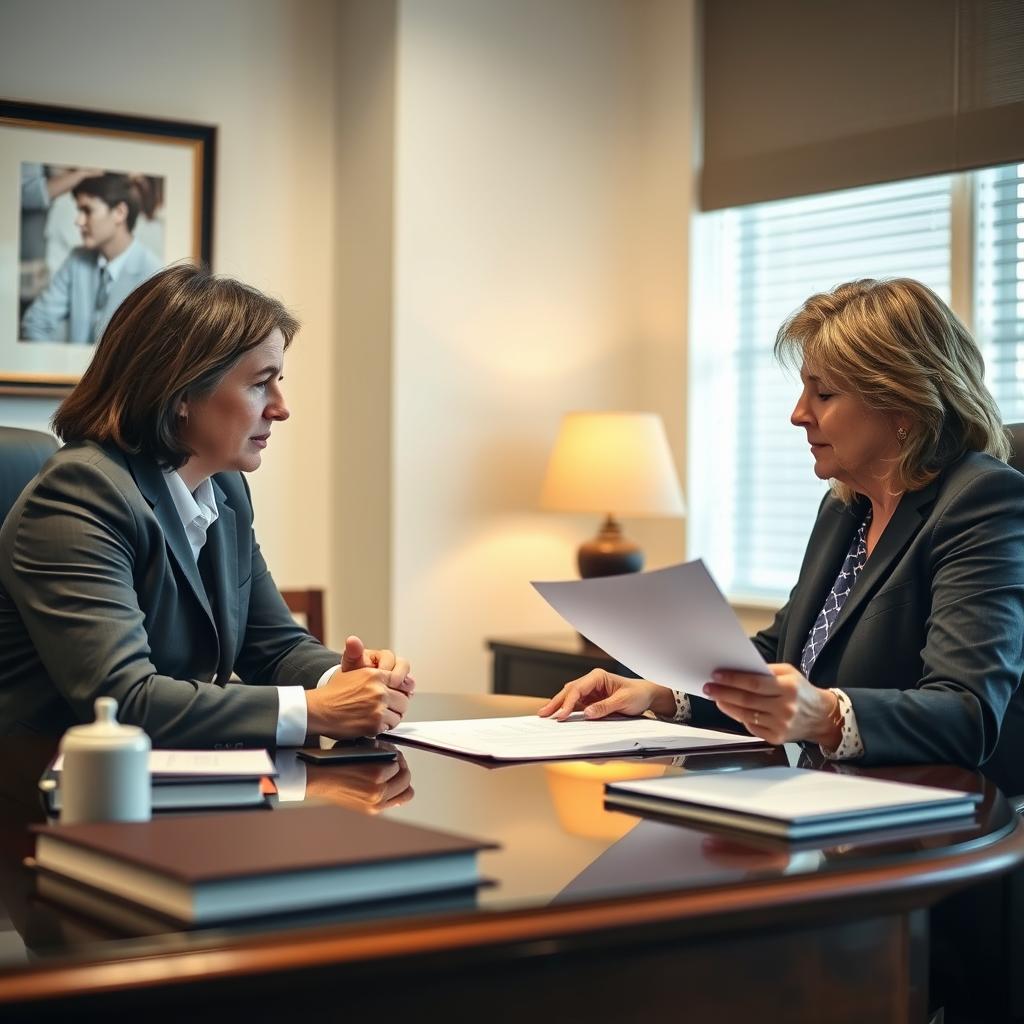
Postnuptial Agreement Lawyer Virginia, VA
Couples across Virginia enter into postnuptial agreements for many reasons—to clarify property rights, to address changed financial circumstances, or to establish a framework for support and division of assets if the marriage later ends. A postnuptial agreement, governed by Virginia Code Title 20, functions much like a prenuptial agreement but is executed after the marriage has taken place. The Virginia Premarital Agreement Act (Va. Code § 20‑147 et seq.) provides the statutory foundation for both premarital and postmarital agreements, setting forth the requirements for a valid, enforceable contract. At Law Offices Of SRIS, P.C., Mr. Sris and the firm’s Of Counsel attorneys represent spouses and prospective parties in the drafting, review, negotiation, and, when necessary, litigation of postnuptial agreements. To discuss your matter, reach the firm at (888) 437‑7747. Law Offices Of SRIS, P.C. – Advocacy Without Borders.
What a Postnuptial Agreement Means in Virginia
A postnuptial agreement is a written contract signed by spouses after marriage that can address the division of property, spousal support, the management of assets during the marriage, and other financial rights and obligations. In Virginia, such agreements are enforceable under the Premarital Agreement Act, which applies to agreements entered into before or after marriage. The Act requires that the agreement be in writing and signed by both parties. A postnuptial agreement that is signed voluntarily, without fraud, duress, or material nondisclosure, and that is not unconscionable when executed, is generally enforceable in the Virginia Circuit Courts.
Virginia is an equitable distribution state. In the absence of a valid postnuptial or premarital agreement, marital property is divided by the court based on a set of statutory factors. A properly drafted postnuptial agreement can alter the default equitable‑distribution scheme and provide certainty about the characterization and division of assets. Such agreements are particularly useful for couples who bring significant separate property into the marriage, who own a business, or who wish to define spousal support expectations without later litigation.
The Circuit Court has exclusive jurisdiction over divorce and equitable distribution matters, and questions concerning the validity or enforcement of a postnuptial agreement typically arise in the context of a divorce action. Mr. Sris and the firm’s Of Counsel attorneys appear in Circuit Courts across Virginia, including those in Fairfax County, Prince William County, Loudoun County, Richmond, and other jurisdictions, to advocate for clients in postnuptial‑agreement disputes.
How Mr. Sris and the Firm’s Of Counsel Attorneys Handle Postnuptial Agreement Cases
Every postnuptial agreement stands or falls on its compliance with Virginia statutory and common‑law requirements. The firm’s approach begins with a thorough examination of the proposed or existing agreement: Was each party represented by independent counsel? Was there full and fair disclosure of assets and liabilities? Was the agreement executed voluntarily, without duress or overreaching? The answers to these questions often determine whether the agreement will be upheld or set aside.
Mr. Sris, Owner and Founder of Law Offices Of SRIS, P.C., and the firm’s Of Counsel attorneys work with clients at every stage—from the initial decision to enter a postnuptial agreement through to enforcement or challenge in court. When representing a spouse who seeks an agreement, the firm drafts clear, enforceable terms tailored to the couple’s specific circumstances, ensuring that all statutory formalities are observed. When a client is presented with an agreement, the firm reviews its terms, advises on the legal consequences, and negotiates modifications where appropriate. In contested matters, the firm litigates issues of validity, interpretation, and enforcement before the appropriate Virginia Circuit Court.
Because many postnuptial agreements intersect with broader divorce and equitable‑distribution proceedings, the firm’s experience in family law litigation is directly relevant. Mr. Sris testified before the Virginia House Courts of Justice Committee in support of 2019 HB 635 (chief patron Del. David Bulova), which revised certain provisions of Virginia’s equitable‑distribution statute. That background, together with the firm’s multi‑state practice, informs the advice given to clients considering postnuptial agreements with cross‑border elements.
About Mr. Sris and the Firm’s Of Counsel Attorneys
Mr. Sris founded Law Offices Of SRIS, P.C. in 1997. A former prosecutor, he brings decades of courtroom experience to family law matters. Mr. Sris is admitted to practice in Virginia, Maryland, the District of Columbia, New Jersey, and New York. He concentrates his practice in family law, including the negotiation and litigation of marital agreements.
The firm’s Of Counsel attorneys contribute substantial experience in family law and litigation. Together, Mr. Sris and the firm’s Of Counsel attorneys have spent years representing clients in Virginia courts on matters ranging from uncontested agreements to highly contested equitable‑distribution trials. The firm’s collective experience allows it to anticipate the issues that can arise in postnuptial‑agreement disputes and to develop practical strategies for each client.
Frequently Asked Questions
What makes a postnuptial agreement enforceable in Virginia?
A postnuptial agreement in Virginia must be in writing, signed by both parties, and entered into voluntarily, without fraud, duress, or material nondisclosure of assets or liabilities. The agreement cannot be unconscionable when executed. Courts will closely examine the circumstances of the signing, including whether each party had the opportunity to consult independent counsel. Full financial disclosure is a critical safeguard; a party who hides significant assets risks having the entire agreement set aside.
Do I need a lawyer to draft or review a postnuptial agreement?
You are not legally required to hire a lawyer, but having experienced legal counsel significantly reduces the risk that the agreement will later be challenged and set aside. A lawyer can ensure that the agreement meets the formal statutory requirements and addresses potential issues such as disclosure, voluntariness, and the scope of waivers. Each party should have their own independent attorney to avoid conflicts and to strengthen the enforceability of the final document.
Can a postnuptial agreement address spousal support?
Yes, a postnuptial agreement may include provisions that modify, limit, or waive spousal support, provided the agreement was executed under fair conditions. However, a provision waiving spousal support may be subject to greater scrutiny if enforcement would leave a spouse dependent on public assistance. Virginia courts examine whether the waiver was knowing and made without coercion, especially when one spouse has much greater financial resources than the other.
How does a postnuptial agreement differ from a separation agreement?
A postnuptial agreement is signed during the marriage and ordinarily addresses what will happen if the marriage ends, while a separation agreement (property settlement agreement) is typically signed when the parties have separated or intend to separate immediately. Both documents can resolve property division and support, but a post‑separation agreement generally signals that the marriage is already heading toward dissolution. A postnuptial agreement, by contrast, can be used to stabilize a marriage that the parties wish to preserve.
What if my spouse and I own property in another state?
A Virginia postnuptial agreement can address out‑of‑state property, but the enforceability of those provisions may depend on the law of the state where the property is located. When substantial assets exist in multiple jurisdictions, it is important to draft the agreement with an understanding of the relevant conflict‑of‑laws principles. Mr. Sris’s multi‑state background and the firm’s multi‑state practice help clients navigate such cross‑border planning.
Can a postnuptial agreement be challenged after a divorce is filed?
Yes, a party may challenge a postnuptial agreement during divorce proceedings on grounds such as fraud, duress, lack of voluntary execution, material nondisclosure, or unconscionability. The burden of proving an affirmative defense to enforcement rests on the party seeking to avoid the agreement. If a court finds that the agreement is invalid in whole or in part, the default equitable‑distribution rules apply. The firm litigates these challenges in Virginia Circuit Courts throughout the Commonwealth.
Outbound Primary Sources (Virginia)
• Virginia Code Title 20 – Domestic Relations
• Virginia Circuit Courts
Attorney advertising. Prior results do not guarantee a similar outcome. Results may vary.
Case results depend on a variety of factors unique to each case.