
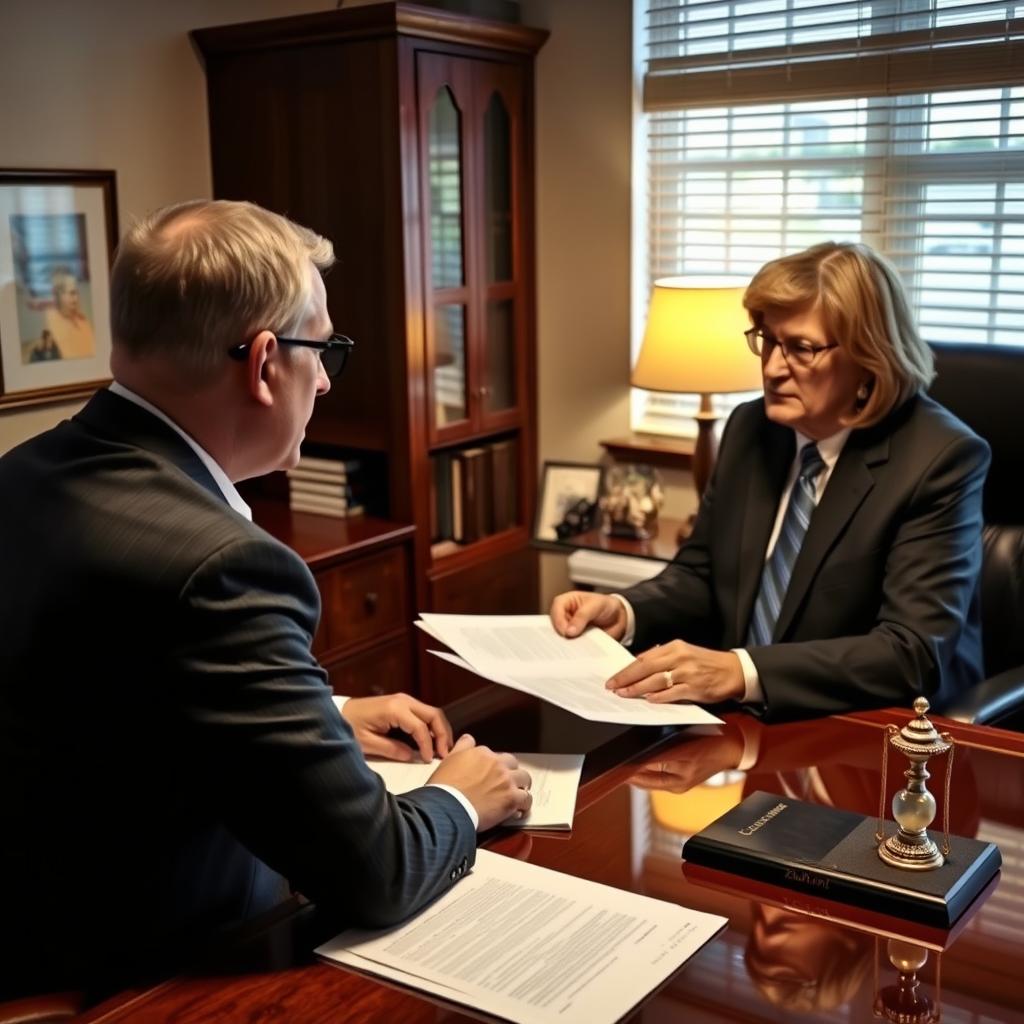
Property Settlement Lawyer King William County, VA
Reaching a fair division of marital assets requires a clear understanding of Virginia’s equitable distribution rules and how King William County courts apply them. Mr. Sris and the firm’s Of Counsel attorneys represent clients in property settlement negotiations and litigation throughout King William County, including West Point, Aylett, and the surrounding communities. Virginia is an equitable distribution state under Va. Code § 20‑107.3—the court divides marital property fairly but not necessarily 50‑50, considering statutory factors such as each spouse’s contributions, the marriage’s duration, and the source of the property. Mr. Sris testified before the Virginia House Courts of Justice Committee in support of 2019 HB 635 (chief patron Del. David Bulova), which revised the equitable distribution statute’s retirement‑plan provisions. For a consultation about a property settlement matter in King William County, reach Law Offices Of SRIS, P.C. at (888) 437‑7747. Law Offices Of SRIS, P.C. – Advocacy Without Borders.
What Property Settlement Means in King William County
In King William County, divorcing spouses may resolve the division of their marital estate through a written separation agreement—often called a property settlement agreement—or, when an agreement cannot be reached, through litigation in the King William County Circuit Court. The Circuit Court at 351 Courthouse Lane, Suite 201, King William, VA 23086, has exclusive original jurisdiction over divorce and equitable distribution. The court classifies all property as separate, marital, or hybrid before valuing the marital share and applying the eleven factors listed in Va. Code § 20‑107.3.
Because King William County lies within the Ninth Judicial District and is served by a single Circuit Court judge, the court’s calendar and the specific judge’s approach to valuation and division can influence the pace and strategy of a property settlement case. Marital assets may include real estate, retirement accounts, business interests, and personal property accumulated during the marriage. Separate property—such as pre‑marital assets, inheritances, and gifts from third parties—is excluded from the marital estate, though any appreciation of separate property during the marriage may be subject to division under Virginia law. The firm’s Of Counsel attorneys are familiar with King William County procedures and work with forensic accountants and business valuators when complex assets require detailed valuation. Results may vary.
How Mr. Sris and the Firm’s Of Counsel Attorneys Handle Property Settlement Cases
Mr. Sris, Owner and Founder of Law Offices Of SRIS, P.C., has concentrated his practice on family law since founding the firm in 1997. He personally oversees property settlement matters, working alongside the firm’s Of Counsel attorneys who bring extensive combined legal experience to every case. The team begins by thoroughly inventorying and classifying all assets and debts—a process that often uncovers overlooked retirement accounts, deferred compensation, or intangible property that should be part of the marital estate. Where spouses can agree on division terms, the firm drafts a comprehensive separation agreement that complies with Va. Code § 20‑109 and avoids costly court disputes. When negotiation stalls, Mr. Sris and the firm’s Of Counsel attorneys are prepared to litigate the division before the King William County Circuit Court, presenting evidence on valuation, contribution, and the statutory equitable‑distribution factors.
The firm’s approach emphasizes clarity and informed decision‑making. Clients receive a candid assessment of how King William County courts are likely to treat each asset, based on the firm’s experience in the Ninth Judicial District and across Virginia. Because Mr. Sris keeps a manageable caseload, he remains directly involved in strategic decisions while the firm’s Of Counsel attorneys handle discovery, motions practice, and settlement negotiations. For intricate marital estates—those involving closely held businesses, professional practices, significant investment portfolios, or retirement benefits governed by the provisions Mr. Sris addressed in his testimony on HB 635—the team coordinates with neutral attorneys to build a reliable evidentiary record.
About Mr. Sris and the Firm’s Of Counsel Attorneys
Mr. Sris, Owner and Founder of Law Offices Of SRIS, P.C., has practiced family law for more than twenty‑five years and is admitted in Virginia, Maryland, the District of Columbia, New Jersey, and New York. A former prosecutor, he testified before the Virginia House Courts of Justice Committee in support of 2019 HB 635 (chief patron Del. David Bulova), bringing his insight into equitable‑distribution law to the legislative process. The firm’s Of Counsel attorneys include former prosecutors and practitioners with decades of courtroom experience. They represent clients in King William County from the firm’s Richmond location at 7400 Beaufont Springs Drive, Suite 300, Room 395, Richmond, VA 23225. Reach the firm at (888) 437‑7747 to request a consultation.
Frequently Asked Questions
Is Virginia a community property state?
No, Virginia is an equitable distribution state—marital property is divided fairly but not necessarily 50‑50. The Circuit Court considers eleven statutory factors under Va. Code § 20‑107.3, including each spouse’s monetary and non‑monetary contributions, the duration of the marriage, and the reasons for the dissolution. Separate property owned before the marriage or received by gift or inheritance is generally excluded from division, though the court may consider its use for family purposes. King William County Circuit Court handles all property division in divorce cases filed in the county.
What is the difference between marital and separate property in Virginia?
Marital property is generally everything acquired by either spouse during the marriage, regardless of whose name is on the title, while separate property includes assets owned before the marriage, inheritances, and gifts from third parties. Classification is the first step in any property settlement. Hybrid property—property that has both separate and marital components—must be carefully traced; for example, a business started before marriage but grown during the marriage may be part marital. The firm’s Of Counsel attorneys work with financial professionals to ensure all assets are properly identified and classified under Virginia law.
How are retirement accounts divided in a King William County divorce?
Retirement accounts are subject to equitable distribution; the court may award a percentage of the marital share of each account, often through a Qualified Domestic Relations Order (QDRO). Mr. Sris’s testimony on 2019 HB 635 addressed provisions of Va. Code § 20‑107.3(g) that authorize direct payment of a marital share of pensions, 401(k)s, IRAs, and other deferred compensation. The firm’s attorneys work with QDRO attorney to draft orders that protect clients’ interests and comply with plan‑administrator requirements.
Can we settle property division outside of court in King William County?
Yes; most property division matters in King William County are resolved through a signed separation agreement, which becomes part of the final divorce decree if approved by the court. A written property settlement agreement under Va. Code § 20‑109 allows spouses to negotiate the division of real estate, bank accounts, vehicles, debts, and retirement assets without a trial. Mediation is available but not mandatory. The firm’s attorneys draft and negotiate separation agreements that are tailored to the specific assets and financial circumstances of each family.
Do I need a lawyer for a property settlement in Virginia?
While you are not legally required to have a lawyer, Virginia property division law is complex—especially when substantial assets, business interests, or retirement benefits are involved—and an experienced attorney can help protect your financial interests. An attorney can identify assets that might otherwise be overlooked, properly classify and value property, negotiate a fair division, and draft an enforceable separation agreement. For a consultation, reach Law Offices Of SRIS, P.C. at (888) 437‑7747.
What factors does the Virginia court consider when dividing property?
The court must weigh eleven statutory factors, including the contributions of each party to the well‑being of the family, the duration of the marriage, the ages and physical and mental condition of the parties, and the circumstances and factors that contributed to the dissolution of the marriage. The court also examines how and when specific property was acquired, the debts and liabilities of each spouse, the liquid or non‑liquid character of the marital property, and the tax consequences to each party. No single factor controls; the judge has broad discretion to reach an equitable result. King William County Circuit Court applies these factors in every contested property division case.
For additional guidance, visit these official resources: Virginia Code Title 20 – Family Law, King William County Circuit Court, and Virginia’s Judicial System.
Related pages: Family Law Lawyer Fairfax County | Family Law Lawyer Fairfax City | Family Law Lawyer Falls Church | Family Law Lawyer Prince William County | Family Law Lawyer Manassas
Attorney advertising. Prior results do not guarantee a similar outcome. Results may vary. Case results depend on a variety of factors unique to each case.