
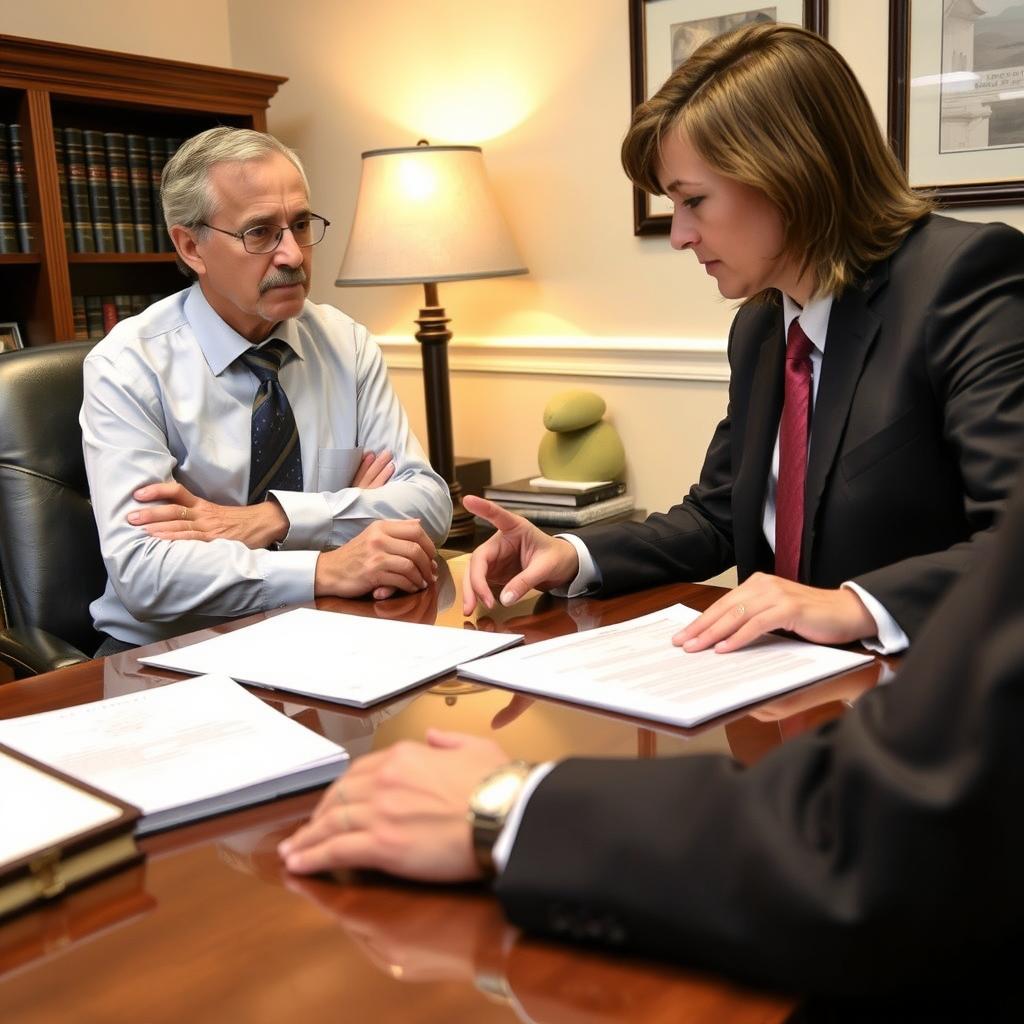
Standby Guardianship Lawyer Rappahannock County, VA
For parents and legal custodians in Rappahannock County, Virginia, a standby guardianship can provide security for a child’s future when a parent faces a serious illness, military deployment, or other circumstances that may prevent them from caring for their child. A standby guardianship is a court‑appointed arrangement that allows a parent to designate a trusted individual to assume the legal rights and responsibilities of caring for the child if the parent becomes unable to do so. The process is governed by Virginia Code § 64.2‑2000 et seq., and petitions are heard in the Rappahannock County Circuit Court. At Law Offices Of SRIS, P.C., Mr. Sris and his Of Counsel concentrate in Virginia family law matters and represent clients in standby guardianship proceedings throughout Rappahannock County. Reach our firm at (888) 437‑7747 to request a consultation. Law Offices Of SRIS, P.C. – Advocacy Without Borders.
What Standby Guardianship Means in Rappahannock County
A standby guardianship is a proactive legal tool authorized by Virginia law that enables a parent or legal custodian to appoint a future guardian for a minor child. The guardianship takes effect only upon the occurrence of a triggering event specified in the petition—most often the parent’s death, the onset of a debilitating illness, or a period of incapacity. Until that event occurs, the parent retains full legal authority over the child, and the standby guardian has no immediate responsibility. This arrangement is often used by parents who have a terminal illness, are facing extended military deployment, or are otherwise concerned about a future interruption in their ability to care for their child.
In Rappahannock County, standby guardianship petitions are filed in the Rappahannock County Circuit Court, located at 250 Gay Street, Suite 1, Washington, VA 22747. The court is part of Virginia’s Twentieth Judicial District and reviews each petition to ensure the appointment serves the best interests of the child. The petition must include the triggering event, the identity and qualifications of the proposed standby guardian, and a statement confirming that the appointment is in the child’s best interests. The court may also appoint a guardian ad litem to represent the child’s interests during the proceeding. Rappahannock County’s rural character and close‑knit communities mean that many of these cases involve family members stepping forward to care for a child, and the court’s process is designed to support stable, familiar caregiving arrangements whenever possible.
How Mr. Sris and His Of Counsel Handle Standby Guardianship Cases
Mr. Sris and his Of Counsel guide families through every step of the standby guardianship process in Rappahannock County. The firm’s approach begins with a careful assessment of the parent’s situation and the child’s needs. They help clients understand the legal requirements under Virginia Code § 64.2‑2000 et seq., including the types of events that can trigger the guardianship, the documentation needed to support the petition, and the role the standby guardian will play once appointed. Because a standby guardianship is intended to provide a seamless transition of care, Mr. Sris and his Of Counsel work to ensure that all necessary consents, medical certifications, and legal declarations are properly drafted and filed.
Once the petition is filed in the Rappahannock County Circuit Court, the firm’s Of Counsel represent clients at any hearings that are scheduled. The court may require testimony from the parent, the proposed standby guardian, and sometimes from other family members or professionals. Mr. Sris and his Of Counsel prepare each client thoroughly, explaining the questions the court is likely to ask and how to present the guardianship plan clearly. Throughout the proceeding, they focus on demonstrating that the standby guardianship arrangement is consistent with the child’s best interests and that the proposed guardian is capable of providing a stable and nurturing home. If a guardian ad litem is appointed, the firm’s attorneys work cooperatively with that individual to address any concerns the court may raise.
About Mr. Sris and His Of Counsel Team
Mr. Sris, Owner and Founder of Law Offices Of SRIS, P.C., concentrates in Virginia family law matters, including standby guardianship petitions. He is admitted in Virginia, Maryland, the District of Columbia, New Jersey, and New York, and he founded the firm in 1997. Mr. Sris testified before the Virginia House Courts of Justice Committee in support of 2019 HB 635 (chief patron Del. David Bulova). His experience spans a range of family law issues, and he works closely with the firm’s Of Counsel to provide thorough representation in guardianship proceedings across Rappahannock County.
Mr. Sris and his Of Counsel bring extensive combined legal experience. Results may vary. The Of Counsel team includes attorneys with backgrounds in child welfare law and related fields, and all firm attorneys collaborate to address the legal and practical concerns that arise in standby guardianship cases. Clients in Rappahannock County are served from the firm’s Fairfax location, and consultations are available by appointment.
Frequently Asked Questions
What is a standby guardianship in Virginia?
A standby guardianship is a legal arrangement under Virginia Code § 64.2‑2000 et seq. That allows a parent or legal custodian to designate a person to become the guardian of a minor child upon the occurrence of a specified future event, such as the parent’s death, incapacity, or deployment. The designated standby guardian does not assume any authority until that triggering event actually occurs. The arrangement must be approved by the circuit court, which evaluates whether the plan serves the best interests of the child. A standby guardianship does not terminate parental rights; it simply provides a pre‑approved transition of care to a trusted individual when the parent is unable to care for the child.
Who can petition for standby guardianship in Rappahannock County?
A parent or legal custodian of a minor child may petition the Rappahannock County Circuit Court for the appointment of a standby guardian. The petitioner must demonstrate that the designation is in the child’s best interests and must identify the specific triggering event that will activate the guardianship. The proposed standby guardian must be a person who is willing and able to assume the responsibilities of caring for the child. The court reviews the petition, and if satisfied, enters an order appointing the standby guardian. The standby guardian does not gain any rights until the triggering event is documented and confirmed.
When does a standby guardianship take effect?
The standby guardianship takes effect only upon the occurrence of the specific event stated in the court order, such as the parent’s death, a physician’s certification of incapacity, or the parent’s deployment. Until that event occurs, the parent retains full legal authority over the child. Once the event happens, the standby guardian must file a notice with the court along with documentation proving the event, and the court then issues an order confirming the guardian’s authority. This automatic activation avoids the delay of a new court proceeding at a time when the child most needs stability.
Do I need a lawyer to file a standby guardianship petition in Rappahannock County?
Virginia law does not require a lawyer to file a standby guardianship petition, but having an experienced attorney can help ensure the petition is properly prepared and that the court’s requirements are fully met. Mistakes in the petition or supporting documents can lead to delays or denial. An attorney can also advise on the selection of an appropriate triggering event, handle communication with any guardian ad litem appointed by the court, and represent the family at hearings. For families facing complex health or family circumstances, legal guidance often makes the process smoother and more reliable.
How does the court decide whether to grant a standby guardianship in Rappahannock County?
The Rappahannock County Circuit Court decides a standby guardianship petition by evaluating the best interests of the child, the qualifications of the proposed standby guardian, and the appropriateness of the triggering event. The court may consider the child’s relationship with the proposed guardian, the guardian’s ability to provide a stable home, and the parent’s reasons for seeking the guardianship. If a guardian ad litem is appointed to represent the child, that person’s report and recommendation carry significant weight. The court’s overriding concern is to ensure that the arrangement protects the child’s welfare and maintains, as much as possible, the continuity of the child’s family relationships.
What is the difference between a standby guardianship and a regular guardianship in Virginia?
Unlike a regular guardianship, which transfers immediate legal authority over a child to another person, a standby guardianship remains inactive until a specific future event occurs. In a regular guardianship, the parent’s authority is often suspended or terminated at the time of the appointment, and the guardian assumes full responsibility right away. A standby guardianship, by contrast, allows the parent to retain full control of the child until the triggering event—such as incapacity or death—makes it impossible for the parent to continue in that role. This makes standby guardianships particularly useful for parents who are planning ahead for a foreseeable future change in their circumstances.
Outbound primary‑source authority: Review the standby guardianship provisions under Virginia Code Title 64.2, Chapter 20 and the website of the Rappahannock County Circuit Court for information on local filing.
Attorney advertising. Prior results do not guarantee a similar outcome.
Results may vary.
Case results depend on a variety of factors unique to each case.