
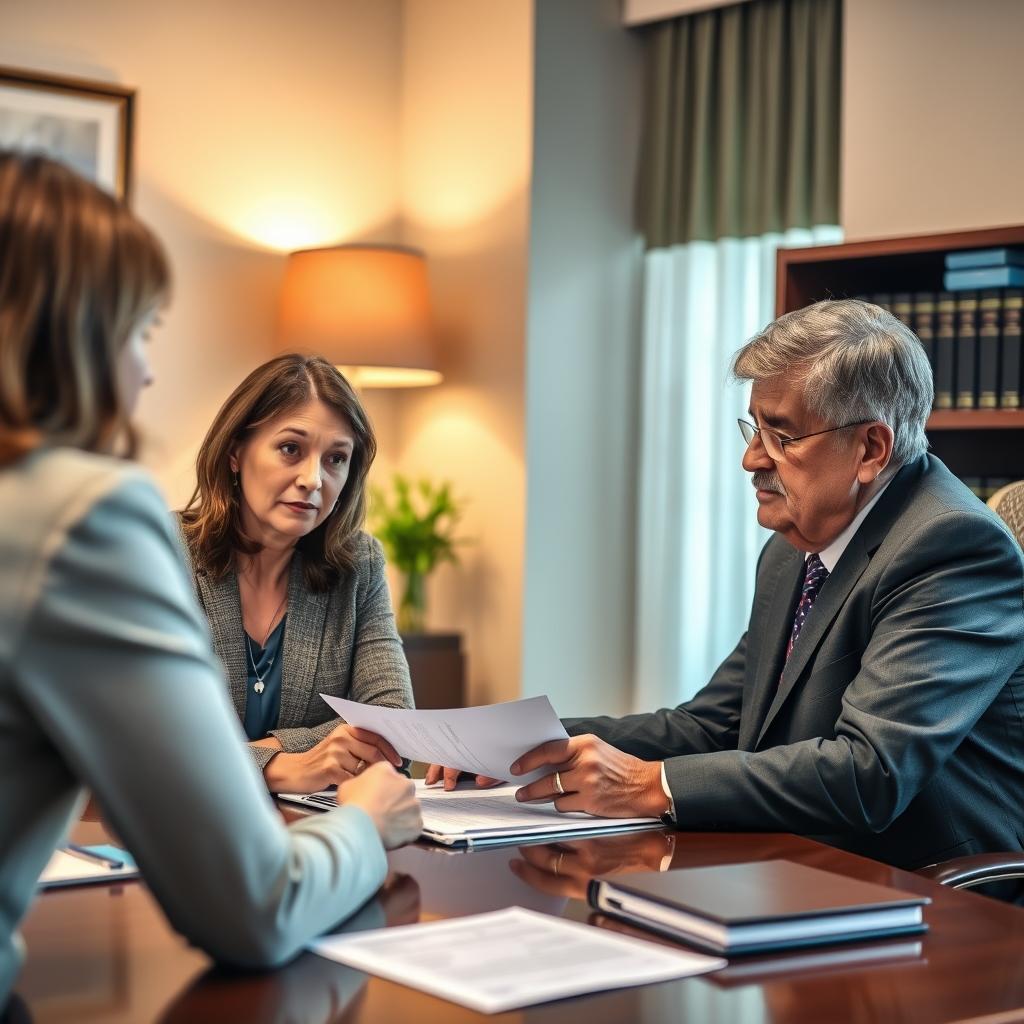
Uncontested Divorce Lawyer Rockingham County, VA
An uncontested divorce in Rockingham County, Virginia offers a streamlined path for couples who agree on all material terms of their separation. When both parties have resolved property division, spousal support, and—if minor children are involved—custody and child support, the matter can proceed without protracted litigation. Law Offices Of SRIS, P.C., founded in 1997, represents clients throughout the Shenandoah Valley, including Harrisonburg, Bridgewater, Dayton, Elkton, Timberville, and Broadway. Mr. Sris and his Of Counsel appear in Rockingham County Circuit Court, located at 53 Court Square in Harrisonburg, on family law matters ranging from simple agreed divorces to complex equitable distribution disputes. Virginia law requires a period of separation before the court may enter a decree of divorce. In uncontested cases where the parties have signed a comprehensive separation agreement, the process typically moves through the court efficiently. Reach our location at (888) 437-7747. Law Offices Of SRIS, P.C. — Advocacy Without Borders.
What Uncontested Divorce Means in Rockingham County, Virginia
Virginia Code § 20-91 permits a no-fault divorce on the ground of separation. For couples without minor children, the separation period is six months if they have executed a written separation agreement resolving all property and support issues. With minor children, the required separation is one year. Rockingham County Circuit Court has exclusive jurisdiction over divorce, equitable distribution, and spousal support, while the Rockingham County Juvenile and Domestic Relations District Court handles standalone custody, visitation, and child support matters. The same Circuit Court at 53 Court Square, Harrisonburg, Virginia 22801 hears all family law cases arising in the county.
Because Virginia is an equitable distribution state, the court divides marital property based on fairness rather than a rigid formula. In an uncontested divorce, however, the parties’ own signed property settlement agreement effectively replaces the court’s discretion—the court will generally incorporate the agreement into the final decree if it satisfies statutory requirements. A corroborating witness must testify at the final hearing to establish the separation ground, even when the matter is uncontested. Mr. Sris and his Of Counsel prepare clients for this hearing and ensure that all procedural obligations are met so the process moves as smoothly as possible. They serve families across Rockingham County’s communities, from Harrisonburg and Bridgewater to Elkton and Timberville.
How Mr. Sris and His Of Counsel Handle Uncontested Divorce Cases
Every uncontested divorce begins with a thorough review of the client’s circumstances. Mr. Sris and his Of Counsel team confirm that the statutory separation period has been satisfied and that the parties have reached a mutually agreeable resolution on all issues that must be addressed—division of assets and debts, spousal support, and, where applicable, custody, visitation, and child support. If a comprehensive separation agreement already exists, the team reviews it for completeness, enforceability, and conformity with Virginia law. If one has not yet been drafted, Mr. Sris and his Of Counsel work with the client to prepare an agreement that protects the client’s interests while remaining acceptable to both sides.
Once the paperwork is finalized, the Complaint for Divorce is filed in Rockingham County Circuit Court. Because the matter is uncontested, the timeline depends primarily on the court’s docket and the availability of a final hearing date. The client and the corroborating witness appear at the hearing; Mr. Sris or a member of his Of Counsel team handles the proceeding. After the court reviews the agreement and hears the testimony, the judge enters a final decree of divorce. Throughout the process, the firm keeps the client informed of each step and any necessary adjustments. The goal is a resolution that avoids unnecessary litigation while safeguarding the client’s legal position.
About Mr. Sris and His Of Counsel Team
Mr. Sris, Owner and Founder of Law Offices Of SRIS, P.C., has practiced family law since 1997. He is admitted in Virginia, Maryland, the District of Columbia, New Jersey, and New York. His background as a former prosecutor informs his ability to analyze legal issues from multiple angles, and he testified before the Virginia House Courts of Justice Committee in support of 2019 HB 635 (chief patron Del. David Bulova). Mr. Sris keeps his caseload limited to ensure deep involvement in each matter, working alongside a team of experienced Of Counsel attorneys who bring diverse courtroom and negotiation experience.
Mr. Sris and his Of Counsel bring over 120 years of combined legal experience and 4,739+ documented firm-wide results. Results may vary. The firm maintains a Shenandoah Location at 505 N Main St, Suite 103, Woodstock, VA 22664, conveniently situated to serve clients in Rockingham County and the surrounding area. Appointments are available by calling (888) 437-7747. No lawyers outside the firm—only Mr. Sris and his Of Counsel handle client matters.
Frequently Asked Questions
What is an uncontested divorce in Virginia?
An uncontested divorce occurs when both spouses agree on all terms of the divorce, including property division and child-related matters, and seek a court order to dissolve the marriage. In Virginia, the most common ground for an uncontested divorce is a no-fault separation under Va. Code § 20-91(9). If the couple has no minor children and a signed separation agreement, the required separation period is six months; otherwise, it is one year. Because all issues are resolved by agreement, the matter typically proceeds without trial, though a final hearing with a corroborating witness is still necessary. Mr. Sris and his Of Counsel guide clients through this process to ensure the agreement is properly drafted and the hearing proceeds smoothly.
Do I need a lawyer for an uncontested divorce in Rockingham County?
You are not legally required to hire a lawyer, but having experienced counsel helps ensure your separation agreement is enforceable and your rights are protected. Even in an uncontested matter, mistakes in drafting—such as omitting required language for retirement division or spousal support waivers—can create expensive problems later. An attorney identifies potential issues with the agreement, confirms that all statutory requirements are met, and handles the procedural steps before the Rockingham County Circuit Court. For many people, the cost of correcting a flawed agreement far exceeds the cost of having a lawyer prepare it correctly the first time.
How long does an uncontested divorce take in Rockingham County?
The timeline for an uncontested divorce depends on the court’s calendar, the mandatory separation period, and the completeness of the parties’ paperwork. Once the separation period has run and the separation agreement is finalized, the Complaint is filed with the Rockingham County Circuit Court. The court then schedules a hearing; the wait for a hearing date varies based on docket volume. After the hearing, the judge may enter the final decree immediately or issue it shortly afterward. Mr. Sris and his Of Counsel help clients move the matter forward efficiently by preparing all documents correctly before filing.
How is property divided in an uncontested divorce in Virginia?
Property division in an uncontested divorce is governed by the terms of the separation agreement, not by the court’s equitable distribution findings. Virginia law classifies property as marital, separate, or hybrid, but when both parties agree on how assets and debts will be divided, the court will generally incorporate that agreement into the final decree. Retirement accounts, real estate, bank accounts, and personal property can all be addressed in the agreement. If the agreement is silent or incomplete on a particular asset, the court may retain jurisdiction to divide it later, so a thorough agreement is essential. Mr. Sris and his Of Counsel help clients identify all assets and draft clear, enforceable division terms.
What is the difference between uncontested and contested divorce in Virginia?
An uncontested divorce involves full agreement between the parties on all issues, while a contested divorce involves disputes that the court must resolve. In a contested divorce, the parties litigate grounds for divorce, equitable distribution, spousal support, custody, and child support. This can require discovery, depositions, expert witness testimony, and a trial. An uncontested divorce, by contrast, relies on the parties’ own signed agreement, and the court’s role is primarily to confirm that the statutory requirements are met. Because uncontested divorces avoid the cost and delay of litigation, they are generally quicker and less expensive. However, even an uncontested divorce requires careful preparation to ensure the agreement is legally sufficient.
What documents are needed for an uncontested divorce in Rockingham County?
The essential documents for an uncontested divorce in Virginia include the Complaint for Divorce, a signed separation agreement, corroborating witness testimony, and related civil-cover and scheduling forms. The Complaint is filed with the Rockingham County Circuit Court and must allege the grounds for divorce and the statutory prerequisites. The separation agreement resolves all property, support, and child-related issues. At the final hearing, a corroborating witness must testify to establish the separation ground. Additional documents such as a VS-4 statistical form may be required. Mr. Sris and his Of Counsel prepare and file all necessary paperwork on behalf of the client.
Also serving: Shenandoah County family law lawyer · Frederick County family law lawyer · Warren County family law lawyer · Clarke County family law lawyer · Augusta County family law lawyer.
Virginia family law statutes: Virginia Code Title 20 · Rockingham County Circuit Court: Rockingham Circuit Court · Virginia judicial system: Virginia Courts.
Attorney advertising. Prior results do not guarantee a similar outcome. Results may vary. Case results depend on a variety of factors unique to each case.