
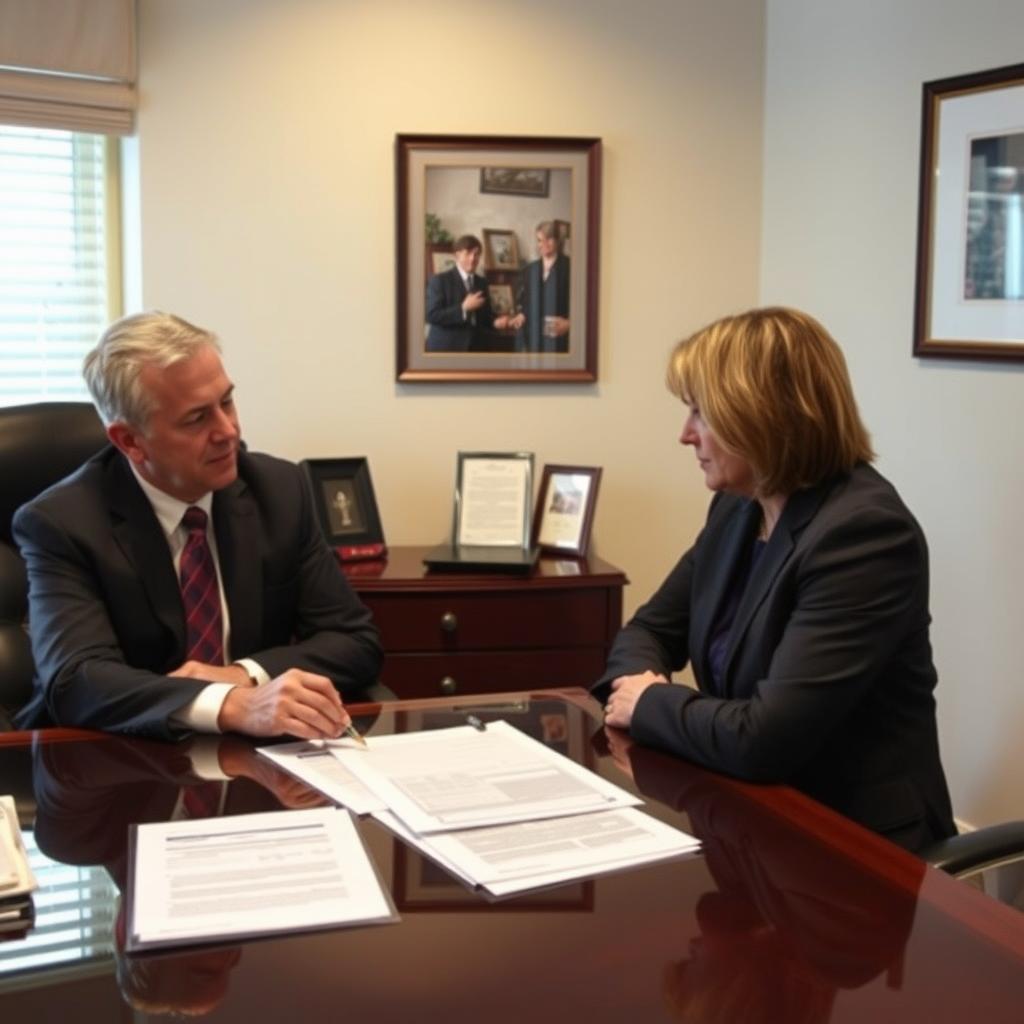
Marital Property Lawyer Louisa County, VA
In Louisa County, Virginia, dividing marital property during a divorce requires familiarity with the county’s court procedures and Virginia’s equitable distribution law. The classification and division of assets—homes, retirement accounts, business interests, and debts—directly affects the financial future of each spouse. Mr. Sris, a former prosecutor and the Owner and Founder of Law Offices Of SRIS, P.C., has practiced family law in Virginia since 1997. The firm’s Of Counsel attorneys work alongside Mr. Sris on matters involving marital property in Louisa County Circuit Court, located at 100 West Main Street, Louisa, VA 23093. For a consultation on your specific property division concerns, reach Law Offices Of SRIS, P.C. at (888) 437-7747. Law Offices Of SRIS, P.C. – Advocacy Without Borders.
What Marital Property Means in Louisa County, Virginia
Virginia is not a community property state. Instead, it follows equitable distribution under Va. Code § 20-107.3. This means the Louisa County Circuit Court divides marital property fairly—but not necessarily equally—between the spouses. The court first classifies each asset as marital, separate, or hybrid, then assigns a value, and finally distributes the marital share based on statutory factors.
Marital property generally includes everything the spouses earned or acquired during the marriage, regardless of whose name is on the title. Separate property—assets owned before the marriage, gifts to one spouse from a third party, or an inheritance—remains with the owning spouse if it was kept distinct. Hybrid property, such as a retirement account funded both before and during the marriage, requires tracing and often an experienced attorney analysis.
Louisa County’s location along the I‑64 corridor between Richmond and Charlottesville means many residents work in one county and own property in another. The firm’s Richmond location regularly serves Louisa County clients and appears in the Louisa County Circuit Court, which has exclusive jurisdiction over divorce and equitable distribution. The Louisa County Juvenile and Domestic Relations District Court handles related custody and support issues, but the property division itself happens in Circuit Court. Several communities, including the town of Louisa, Mineral, and Zion Crossroads, fall within the firm’s service area.
Local procedural practice requires that a complaint for divorce include a request for equitable distribution. If the parties have a signed marital settlement agreement that resolves all property issues, the court may incorporate the agreement into the final decree; if not, the judge schedules a trial on the disputed items. The timeline depends on case complexity and the court’s calendar, but the firm works to move matters forward efficiently.
How Mr. Sris and the Firm’s Of Counsel Attorneys Handle Marital Property Cases
Mr. Sris and the firm’s Of Counsel attorneys bring extensive combined legal experience to marital property matters in Louisa County. The approach starts with identifying and classifying every asset and debt. That process may involve reviewing tax returns, bank statements, business records, and real estate deeds. When assets require valuation—such as a closely held business, professional practice, or defined-benefit pension—the firm works with forensic accountants and valuation professionals to present a supportable number to the court.
In many cases, the parties negotiate a marital settlement agreement rather than litigate. The firm’s Of Counsel attorneys participate in drafting these agreements to accurately address title transfers, QDRO language for retirement plans, debt allocation, and tax considerations. If an agreement cannot be reached, the firm prepares a case for trial, focusing on the 11 statutory factors that the court must consider under Va. Code § 20-107.3: duration of the marriage, each spouse’s contributions to the marital estate, the circumstances experienced to the divorce, and the other factors set out in the statute.
Virginia law also allows pendente lite relief during the divorce. A motion can ask the court for temporary exclusive use of the marital home, an order preventing the sale or transfer of property, or temporary spousal support while the case is pending. The firm handles these motions when necessary to protect a client’s position.
About Mr. Sris and the Firm’s Of Counsel Attorneys
Mr. Sris founded Law Offices Of SRIS, P.C. in 1997. A former prosecutor, he is admitted to practice in Virginia, Maryland, the District of Columbia, New Jersey, and New York. Mr. Sris testified before the Virginia House Courts of Justice Committee in support of 2019 HB 635 (chief patron Del. David Bulova), a bill addressing the division of certain retirement assets in divorce. This firsthand knowledge of the statute’s history provides additional insight into Virginia’s equitable distribution framework.
The firm’s Of Counsel attorneys include practitioners who have spent years handling family law, criminal defense, and civil litigation. They appear in Louisa County courts on behalf of the firm’s clients. Mr. Sris and the firm’s Of Counsel attorneys rely on a team structure that allows multiple attorneys to address different facets of a property division case—negotiation, valuation analysis, motion practice, and trial preparation. Results may vary. in any specific matter.
Frequently Asked Questions
What is marital property under Virginia law?
Marital property is generally all property acquired by either spouse during the marriage, regardless of legal title. It includes real estate purchased during the marriage, retirement assets accumulated through employment, income earned by either spouse, and debts incurred for family purposes. Separate property—items owned before the marriage, inheritance, or gifts to one spouse—may remain separate unless it has been commingled or retitled. The Louisa County Circuit Court applies Va. Code § 20-107.3 to classify and divide the marital estate.
Is Virginia a 50/50 property division state?
No, Virginia divides marital property equitably, which does not mean equally. The court weighs the statutory factors listed at Va. Code § 20-107.3: the length of the marriage, each spouse’s monetary and non‑monetary contributions, the causes of the divorce, the ages and health of the parties, tax consequences, and other circumstances. One spouse may receive a larger share if the factors support an unequal division. For Louisa County residents, equitable distribution is decided in the Circuit Court.
How does the Louisa County Circuit Court handle property division?
The Louisa County Circuit Court applies Virginia law to classify, value, and distribute marital assets. The judge first receives evidence about the parties’ finances and hears testimony on the statutory factors. If the spouses submit a signed marital settlement agreement, the court may incorporate the agreement into the final divorce decree. If disputes remain, the court holds a trial and issues a ruling. The court has the authority to order the sale of real estate, direct a QDRO for retirement plans, and assign responsibility for marital debts.
Can I keep my inheritance or premarital property in a Louisa County divorce?
Generally, yes, if the asset remained separate and was not used for marital purposes. Separate property retains its character if it is not commingled with marital assets, retitled jointly, or used in a way that makes tracing difficult. An inheritance deposited into a joint account, for example, may lose its separate status. Documentation is important. If the classification of an asset is challenged, the party claiming it as separate must prove that status. A Louisa County marital property lawyer can help trace an asset’s origins.
Do we have to go to court to divide our property?
No, if both spouses reach a complete settlement, a trial may be unnecessary. The parties can negotiate a marital settlement agreement that divides all property, allocates debts, and addresses spousal support and other issues. Once signed and notarized, the agreement can be submitted to the Louisa County Circuit Court as part of an uncontested divorce. Even in contested situations, the court may encourage mediation. Reaching an agreement outside of court often saves time and expense, though the specific outcome depends on the facts of the case.
What if my spouse is hiding assets in Louisa County?
Virginia law provides discovery tools to uncover hidden or undervalued assets. Through requests for production of documents, interrogatories, depositions, and subpoenas to financial institutions, an attorney can investigate whether assets have been concealed. If a spouse has transferred property to a third party to avoid division, the court may consider that conduct as a factor in equitable distribution. The firm works with forensic accountants in cases where asset tracing is especially complex.
Related Practice Areas
Family Law Lawyer Fairfax County, VA |
Family Law Lawyer Prince William County, VA |
Family Law Lawyer Fredericksburg, VA |
Family Law Lawyer Charlottesville, VA
Virginia Primary Legal Sources
Virginia Code Title 20 — Domestic Relations |
Louisa County Circuit Court |
Virginia Judicial System
Attorney advertising. Prior results do not guarantee a similar outcome.
Results may vary.
© 1997-2026 Law Offices Of SRIS, P.C. All rights reserved.
Case results depend on a variety of factors unique to each case.