
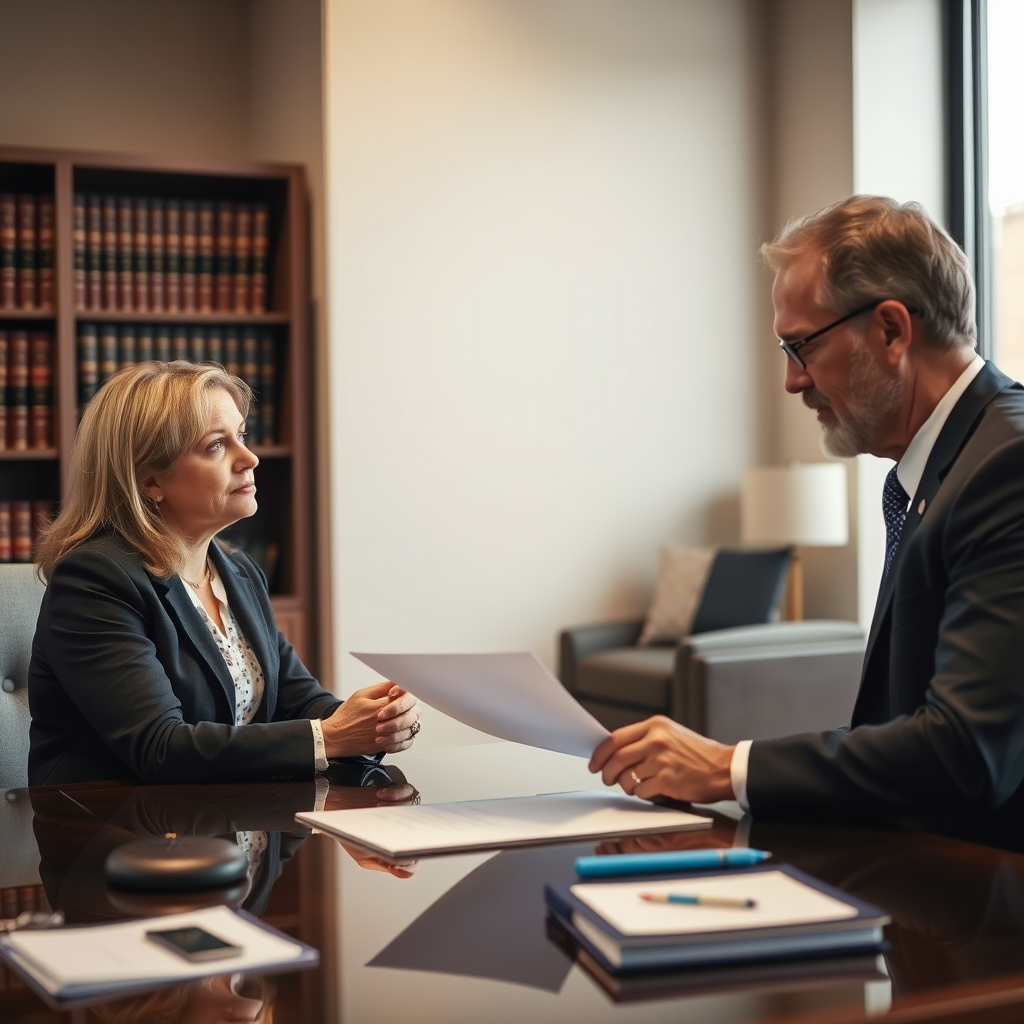
Spousal Support Lawyer in Henrico County, VA
Divorce is inherently complex, involving not only the division of assets but also the delicate financial restructuring of two lives. Among the most significant components of that restructuring is spousal support—often referred to as alimony. If you are navigating divorce proceedings in Henrico County, VA, understanding your rights and obligations regarding spousal support is critical to securing a financially stable future. The laws governing spousal support in Virginia are nuanced, depending heavily on factors like the length of the marriage, the disparity in incomes, and the standard of living established during the union.
At Law Offices Of SRIS, P.C., we recognize that every divorce case is unique. We provide dedicated representation to guide you through the complexities of Virginia’s marital support statutes. Our goal is to ensure that your financial settlement is fair, sustainable, and reflective of both current needs and future realities. If you are seeking a knowledgeable Spousal Support Lawyer in Henrico County, VA, our team has extensive experience helping clients achieve favorable outcomes while adhering strictly to Virginia law.
Understanding Spousal Support in Virginia Law
Spousal support, or alimony, is a court-ordered payment from one spouse to the other following the dissolution of a marriage. It is designed to help the lower-earning spouse maintain a standard of living reasonably comparable to that enjoyed during the marriage. However, it is not a right guaranteed by law; rather, it is an equitable remedy determined by the judge based on a comprehensive review of all financial circumstances.
What Factors Determine Spousal Support Amounts in Virginia?
Virginia law considers several key factors when determining if and how much spousal support should be awarded. These are not exhaustive, but they guide the court’s decision-making process. The primary considerations typically include:
- Length of the Marriage: Generally, the longer the marriage, the more likely a court is to award support payments.
- Income Disparity: A significant gap between the spouses’ incomes can increase the likelihood and amount of support awarded.
- Standard of Living: The lifestyle maintained during the marriage is a major factor used by the court to calculate what the receiving spouse needs to maintain post-divorce.
- Earning Capacity: The ability of the paying spouse to earn income, and the ability of the receiving spouse to become self-supporting, are analyzed.
It is crucial to gather comprehensive financial documentation—including tax returns, pay stubs, and records of assets—to ensure your attorney can present the most accurate picture to the court.
Temporary vs. Permanent Spousal Support
It is important to distinguish between temporary and permanent support. Temporary spousal support is paid during the divorce litigation process while a final judgment has not been reached. This is often governed by emergency motions and is intended to bridge the financial gap until the final settlement. Conversely, permanent spousal support (or rehabilitative alimony) is established in the final divorce decree and lasts for a specified period or under specific conditions.
The duration of support can vary widely. Some awards are designed to last only until the receiving spouse can become self-sufficient (rehabilitative), while others may be intended to maintain a marital lifestyle for a set number of years. We advise clients on the trusted strategy to structure these payments to maximize long-term security.
Navigating Modification and Termination of Support
Spousal support is not static; it can change over time. This is particularly true if one or both spouses experience significant changes in their financial circumstances, such as a major career change, increased income, or the remarriage of the receiving spouse.
When Can Spousal Support Be Modified?
Modification requires demonstrating a “substantial and material change in circumstances” since the original order was entered. For example, if the paying spouse receives a substantial promotion or bonus, or if the receiving spouse completes advanced education leading to higher earning potential, these changes can form the basis for a modification request. The court will then weigh these new facts against the original decree.
What Happens If One Spouse Remarries?
The remarriage of the receiving spouse is one of the most common triggers for spousal support termination or reduction. Virginia law generally recognizes that the financial obligations associated with a new marriage diminish the need for continued support from the first spouse. However, the specific rules and timing are complex and depend on the terms written into your original settlement agreement. Consulting with an experienced Spousal Support Lawyer in Henrico County, VA is necessary to understand how your specific decree addresses this scenario.
The Divorce Process and Financial Disclosure
The foundation of any successful spousal support claim rests on complete and honest financial disclosure. Virginia courts operate under strict rules regarding what assets and debts must be revealed. Failure to disclose assets, or providing inaccurate financial information, can lead to severe legal penalties, including being held in contempt of court or having the judge rule against you entirely.
What is Spousal Support in Virginia?
In simple terms, spousal support is a financial mechanism designed to mitigate the economic shock of divorce. It aims to prevent one spouse from becoming destitute or unable to maintain a reasonable standard of living due to the dissolution of the marital partnership.
How Does Alimony Work in Henrico County?
The process involves filing petitions, exchanging discovery documents (financial records), negotiating with the opposing counsel, and ultimately presenting evidence to a judge or mediator. Our firm manages this entire spectrum of activity, ensuring that every piece of evidence is admissible and strategically used to support your claim for appropriate spousal support.
How Mr. Sris and the Firm’s Of Counsel Attorneys Handle Spousal Support Cases in Henrico
Handling spousal support cases requires more than just knowledge of Virginia statutes; it demands a nuanced understanding of human finance, emotional dynamics, and judicial procedure. Our approach is highly personalized. We begin by conducting an exhaustive financial audit, mapping out every income stream, asset accumulation, and debt obligation for both parties. This detailed groundwork allows us to build a robust case that anticipates the counterarguments from the opposing side.
When advocating for our clients in Henrico County, we focus on presenting a narrative of financial equity. We do not simply argue for a dollar amount; we argue for a sustainable economic future that respects the contributions of both parties throughout the marriage. Our team utilizes proven negotiation tactics and courtroom advocacy to ensure that the final decree reflects fairness and adherence to the best interests of all involved. If you are facing complex spousal support issues, our dedicated legal professionals are prepared to advocate fiercely for your financial security.
About Mr. Sris and the Firm’s Of Counsel Attorneys
Law Offices Of SRIS, P.C. has built its reputation on providing deeply knowledgeable and ethically grounded representation across multiple jurisdictions. Mr. Sris, Owner and Founder, brings decades of experience in complex family law matters. As a former prosecutor, he possesses a unique perspective on how legal proceedings unfold from the other side, allowing him to anticipate challenges before they arise. He is admitted in Virginia, Maryland, the District of Columbia, New Jersey, and New York, providing our clients with multi-jurisdictional insight.
Our commitment extends beyond our core attorneys. The firm’s Of Counsel attorneys are a network of highly specialized practitioners who bring extensive experience in niche areas of family law, including complex asset division and interstate support issues. We integrate their specialized knowledge into every case, ensuring that whether your matter involves unique financial instruments or cross-state jurisdictional hurdles, you receive comprehensive counsel from the entire depth of our legal network.
Comprehensive Spousal Support Resources
To help guide your understanding of this complex area of law, we have compiled answers to frequently asked questions regarding spousal support in Virginia. Please remember that this information is for educational purposes and does not constitute specific legal advice; you must speak with an attorney about your particular situation.
What is the difference between alimony and spousal support?
Answer: In practice, the terms are often used interchangeably in Virginia law. However, legally, spousal support is the broader term encompassing payments intended to maintain a standard of living after divorce, while alimony is the historical or common-law synonym for such payments.
Does spousal support automatically end when I file for divorce?
Answer: No. Filing for divorce does not automatically terminate any existing support obligations. The court must issue a specific order detailing the start date, duration, and amount of any new or modified support payments.
Can I negotiate spousal support without going to court?
Answer: Yes, negotiation is often the most efficient route. Many couples successfully reach a mutually agreeable settlement through mediation or direct negotiation, which can then be formalized into a binding agreement.
What if the support amount seems too high?
Answer: If you believe the requested amount is excessive, your attorney will analyze the basis of the claim, challenge the documentation provided by the other side, and negotiate for a more equitable figure based on established Virginia guidelines.
Does spousal support cover child support?
Answer: No. Child support and spousal support are distinct legal obligations. Child support is intended for the physical care of the minor child, while spousal support is intended to support the financial needs of the former spouse.
Can I get spousal support if I was married for only a few years?
Answer: While shorter marriages generally result in lower or temporary support awards, the length of the marriage is only one factor. The disparity in income and the standard of living during those years will also be considered by the court.
What documentation should I gather for my case?
Answer: You must gather tax returns (last 3-5 years), pay stubs, records of all assets (bank statements, investment accounts), and documentation detailing any separate income sources.
Can spousal support be paid through wage garnishment?
Answer: Yes, it is a common method. The final divorce decree will specify the payment mechanism, which can include direct payments, property transfers, or mandatory wage garnishment.
Why Choose Our Firm for Your Spousal Support Needs in Henrico County?
Navigating marital finance law requires specialized experience. Our practice is built on a foundation of deep local knowledge and an unwavering commitment to client advocacy. We understand the unique legal landscape of Henrico County, VA, and how local judges interpret complex statutes regarding spousal support.
Do not attempt to navigate this process alone. The stakes—your financial stability and future security—are too high for guesswork. We invite you to reach out to Law Offices Of SRIS, P.C. Today. By scheduling a consultation, you take the first crucial step toward understanding your rights and building a secure post-divorce life. Contact us at (888) 437-7747 to schedule your appointment by our location in Henrico County, VA.
Ready to Discuss Your Spousal Support Options?
The financial details of divorce are overwhelming. Let our experienced team at Law Offices Of SRIS, P.C. provide clarity and strategic guidance. We handle all aspects of spousal support claims in Henrico County, VA, with discretion and professionalism.
Call us today to request a consultation: (888) 437-7747
***Disclaimer: The information provided on this page is for general informational purposes only and does not constitute legal advice. Virginia law regarding spousal support is highly fact-specific and subject to change. You must consult with a qualified attorney licensed in the relevant jurisdiction to discuss the specifics of your situation.***
Case results depend on a variety of factors unique to each case.
Attorney advertising. Prior results do not guarantee a similar outcome.